
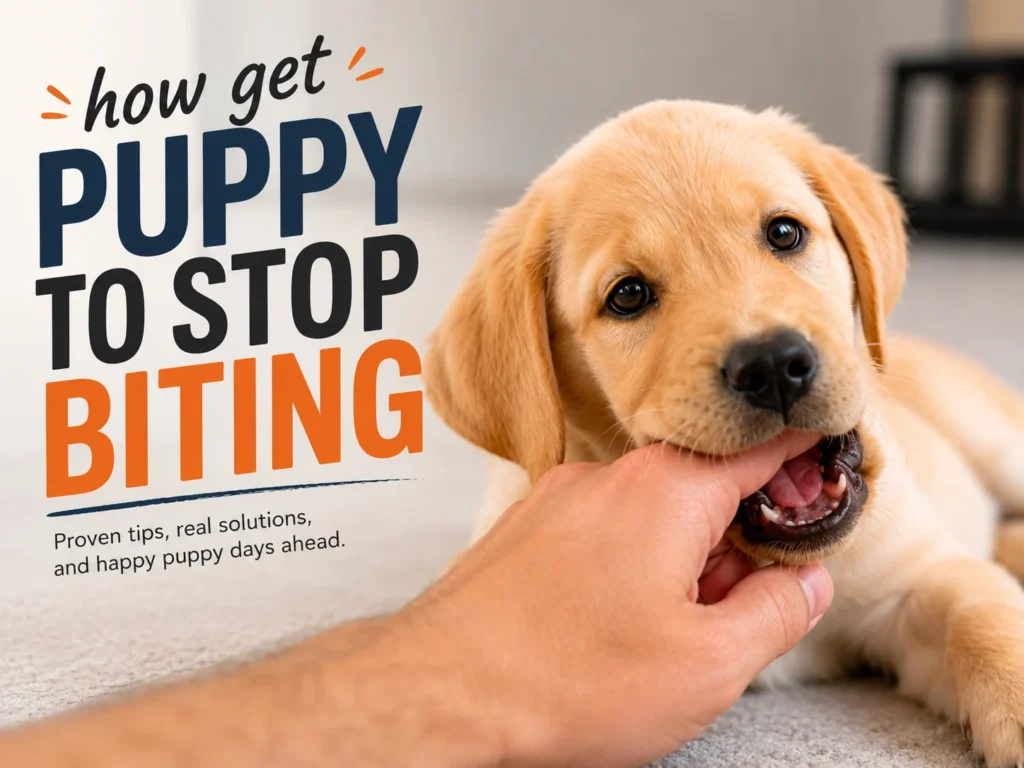
Here’s the reassuring part: learning how to stop puppy biting is one of the most normal stages of raising a healthy dog.
According to the American Kennel Club (AKC), mouthing and nipping are among the most common behaviors seen in healthy puppies because they use their mouths to explore the world, communicate, and learn social skills. That doesn’t make the bites any less painful, but it does mean you’re not raising an aggressive dog.
The challenge is teaching your puppy one important lesson: Human skin is delicate. Toys are for biting. People are not.
The good news is that modern dog training no longer recommends yelling, hitting, or forcing a puppy’s mouth shut. Organizations such as the American Veterinary Society of Animal Behavior (AVSAB) encourage reward-based training because it helps puppies learn faster while reducing fear and anxiety.
If you’ve found this guide, chances are your puppy has already left a few tiny battle scars on your hands. Maybe they grab your sleeves every time you walk across the room. Maybe they launch themselves at your ankles while you’re making coffee. Or perhaps they’ve decided your favorite sweatshirt is their new chew toy.
In this guide, you’ll learn why puppies bite, what they’re trying to communicate, and the five training techniques professional trainers use to turn a tiny “land shark” into a polite family companion.
Why Do Puppies Bite?
New puppy owners often ask the wrong question. Instead of asking, “How do I stop the biting?” it’s more helpful to ask, “Why is my puppy biting right now?”
The answer changes depending on your puppy’s age, energy level, and environment. Understanding the reason behind the behavior makes choosing the right training method much easier.
Puppies Experience the World Through Their Mouths
Imagine trying to understand a completely new world without hands. That’s essentially what life is like for a young puppy. While human babies reach for objects with their fingers, puppies investigate almost everything with their mouths. Shoes, blankets, furniture, leaves in the garden, and unfortunately, your hands all become part of that learning process.
When a puppy gently mouths your fingers, they’re often gathering information rather than trying to hurt you. They’re asking questions like:
- “What is this?”
- “Does it move?”
- “Is it fun?”
- “Can I play with it?”
This behavior is completely different from aggressive biting. According to the American Veterinary Society of Animal Behavior (AVSAB), exploratory mouthing is a normal part of early canine development and helps puppies build confidence while learning about their surroundings.
Vet Insight
Puppies don’t naturally understand the difference between chewing a rope toy and chewing a human hand. That distinction has to be taught through consistent feedback and positive reinforcement.
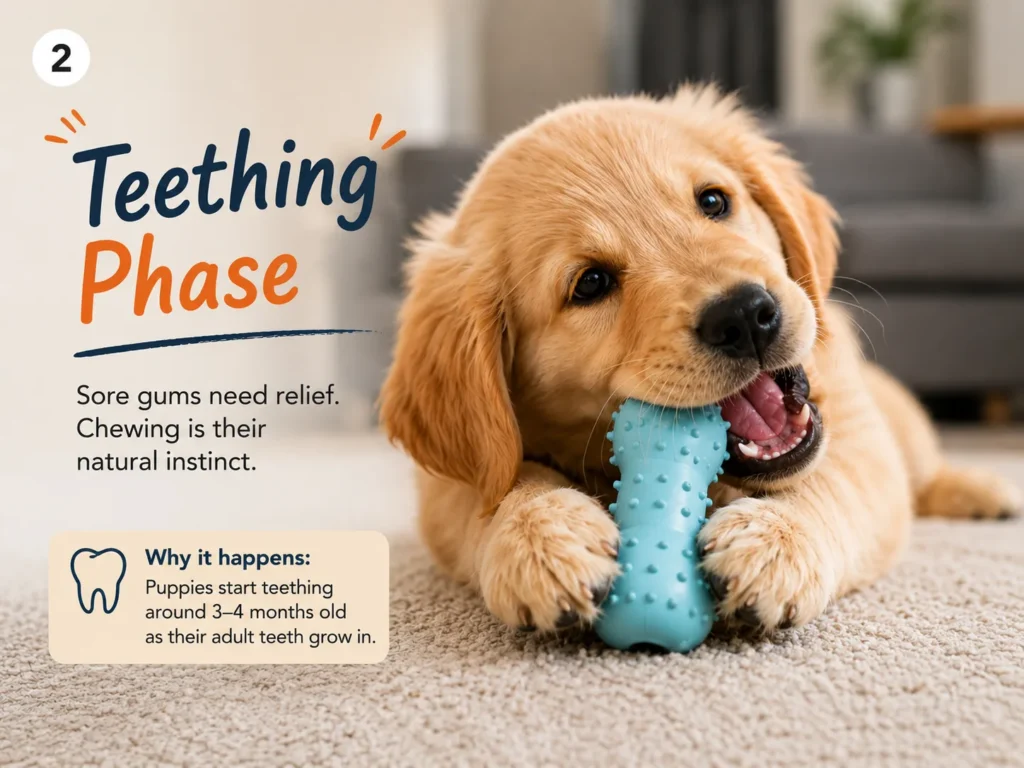
Teething Is Uncomfortable, and Chewing Helps
One of the biggest changes happens between three and six months of age. During this period, puppies begin replacing approximately 28 baby teeth with 42 permanent adult teeth. As the adult teeth push through the gums, puppies may experience:
- Swollen gums
- Itching
- Mild inflammation
- Pressure
- Tenderness
Chewing is one of the few natural ways they can relieve that discomfort. This explains why many owners notice a sudden increase in biting around four months of age. It’s not because the puppy has become “naughty.” Their mouth simply feels uncomfortable. A puppy that ignored chair legs last month may suddenly decide the coffee table, slippers, and your hoodie sleeves are all excellent chew toys.
Trainer Observation
One mistake I see repeatedly is owners removing every object the puppy wants to chew without offering an alternative. Imagine having sore gums and being told you can’t chew anything. Instead of trying to stop chewing altogether, redirect it toward appropriate items such as rubber puppy toys or frozen enrichment toys. Your goal isn’t to eliminate chewing. It’s to change what your puppy chooses to chew.
Sometimes Your Puppy Isn’t Hyper… They’re Exhausted
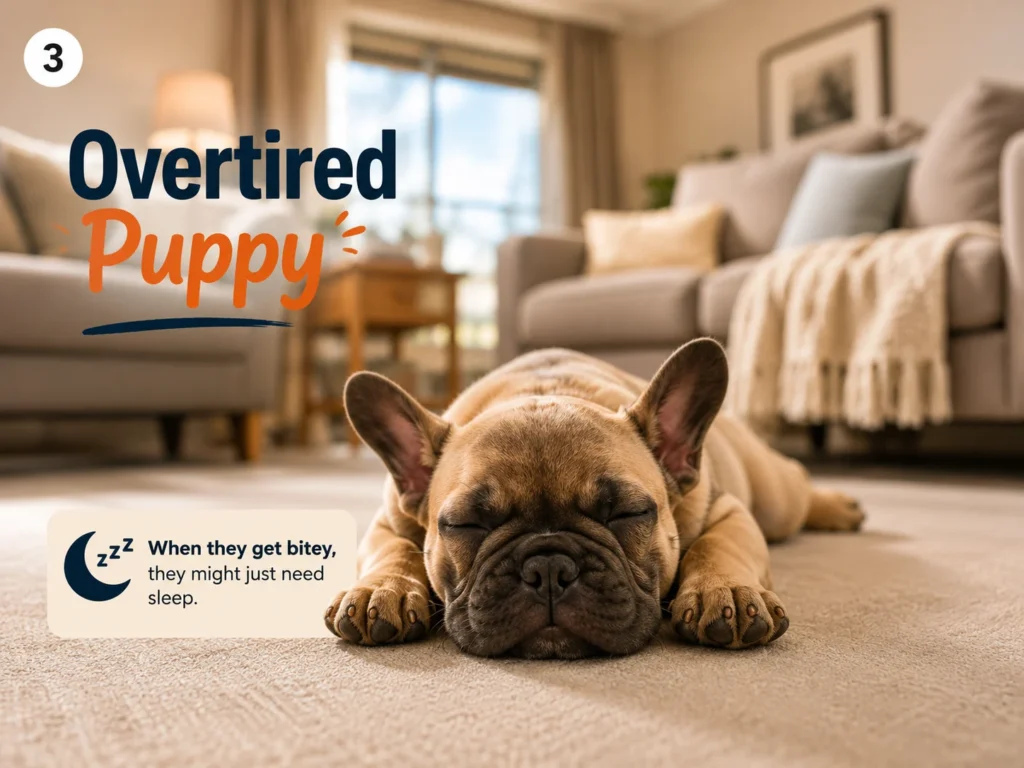
This surprises almost every first-time dog owner. A puppy that’s racing around the house, grabbing pant legs, and biting everything that moves often isn’t asking for another game. They’re asking for sleep.
Young puppies usually need a significant amount of rest each day. If you are wondering how long puppies sleep, they actually require 16 to 20 hours of daily shut-eye to support their rapid growth.
You might notice:
- Wild zoomies through the living room
- Constant biting
- Barking at everything
- Ignoring commands they knew five minutes earlier
- Difficulty settling down
It looks like extra energy. In reality, it’s often the opposite. Their brain is simply overtired.
Real-Life Scenario
A friend of mine adopted a 12-week-old Labrador Retriever named Milo. Every evening, almost like clockwork, Milo transformed from a calm, affectionate puppy into what she jokingly called a “tiny dinosaur.” He grabbed hoodie sleeves, chased socks, and treated everyone’s ankles like tug toys.
Her first instinct was to play fetch for another 20 minutes because she assumed he had too much energy. Instead, the biting became even more intense.
After speaking with a certified trainer, she changed just one thing. Whenever Milo had been awake for about two hours, she guided him into his crate with a frozen Kong toy and let him nap. Within two weeks, the evening biting episodes became shorter and much less intense. The lesson wasn’t that Milo needed more exercise. He needed more rest.
Puppies Learn Through Consequences
Puppies don’t automatically know which behaviors people like. They learn through patterns. If biting always leads to exciting movement, laughter, or chasing, the behavior becomes rewarding. If gentle behavior earns attention, treats, toys, and continued play, puppies naturally begin choosing those behaviors more often.
That’s why modern training focuses less on punishment and more on teaching puppies which choices produce good outcomes. Research consistently shows that reward-based learning creates stronger long-term habits while reducing stress during training.
Puppy Biting Timeline
Biting changes as puppies grow. Knowing what’s happening at each stage helps set realistic expectations.
| Puppy Age | What’s Happening | Why Puppies Bite |
| 8-12 weeks | Exploring a completely new environment | Curiosity, play, learning social skills |
| 3-4 months | Baby teeth begin loosening | Early teething discomfort |
| 4-6 months | Adult teeth erupt rapidly | Peak chewing and mouthing stage |
| 6 months+ | Adult teeth nearly complete | Excitement, habit formation, testing boundaries |
Notice that the most difficult biting period usually overlaps with teething. That isn’t a coincidence. It’s part of healthy development.
Bite Inhibition: Why Teaching a “Soft Mouth” Matters More Than Stopping Biting
Many owners tell trainers, “I just want my puppy to stop biting completely.” That sounds logical. But experienced trainers usually have a different first goal. They want puppies to learn bite inhibition.
Bite inhibition means controlling the pressure of a bite rather than simply avoiding using the mouth altogether. This lesson begins long before puppies move into our homes.
When puppies play with their littermates, one puppy eventually bites another a little too hard. The bitten puppy yelps. Then immediately stops playing. Suddenly, all the fun disappears. After repeating this interaction hundreds of times, puppies begin adjusting how much pressure they use. They learn that gentle play keeps friends nearby. Hard bites make friends leave.
According to the American Kennel Club, this is one of the most important social skills a puppy develops during early life. It’s also one of the reasons puppies benefit from staying with their littermates until the appropriate age before going to new homes.
Vet Insight
A dog with good bite inhibition is generally safer than one that has never learned to control bite pressure. Even if an adult dog becomes frightened, startled, or accidentally stepped on, good bite inhibition can significantly reduce the risk of serious injury. Teaching gentle mouths isn’t encouraging biting. It’s teaching self-control.
In the next section, we’ll put this knowledge into practice with the five-step training system professional trainers use to reduce puppy biting without punishment, fear, or intimidation.
The 5-Step Method Professional Trainers Use to Stop Puppy Biting
Now that you understand why puppies bite, let’s focus on what actually works. One thing you’ll notice is that none of these techniques involve yelling, hitting, alpha rolls, or forcing your puppy’s mouth shut. That’s intentional. Modern canine behavior research has consistently shown that puppies learn best through clear consequences, repetition, and positive reinforcement, not fear.
If you’re consistent with the following five steps, most puppies begin showing noticeable improvement within two to four weeks.
Step 1: Use the “Ouch & Freeze” Method
When your puppy bites too hard, your first reaction is probably to pull your hand away. Unfortunately, that’s exactly what many puppies want. Moving hands look like prey. They become even more exciting.
Instead, the moment you feel your puppy’s teeth press too hard against your skin, say a short, high-pitched: “Ouch!” or “Yip!”
Don’t scream dramatically. Don’t keep repeating it. Just one quick sound. Then… Freeze. Completely.
Keep your hand still for about five to ten seconds. Avoid eye contact. Don’t push your puppy away. Don’t start talking. Simply become boring. If your puppy releases your hand, calmly continue interacting. If they immediately bite again, move on to Step 2.
Trainer Observation
Many puppies actually become more excited when owners wave their hands around after being bitten. From the puppy’s perspective, you’ve just started a chasing game. Remaining completely still removes the reward.
What If “Ouch!” Makes My Puppy Bite Harder?
This is surprisingly common. Some confident, energetic puppies think a high-pitched sound means you’re joining the game. If you’ve tried the yelp several times and the biting consistently becomes worse, skip the vocal response entirely. Quietly end the interaction instead. Not every puppy responds the same way. Good training is about observing your individual dog rather than following one rule blindly.
Step 2: Redirect the Bite to Something Appropriate
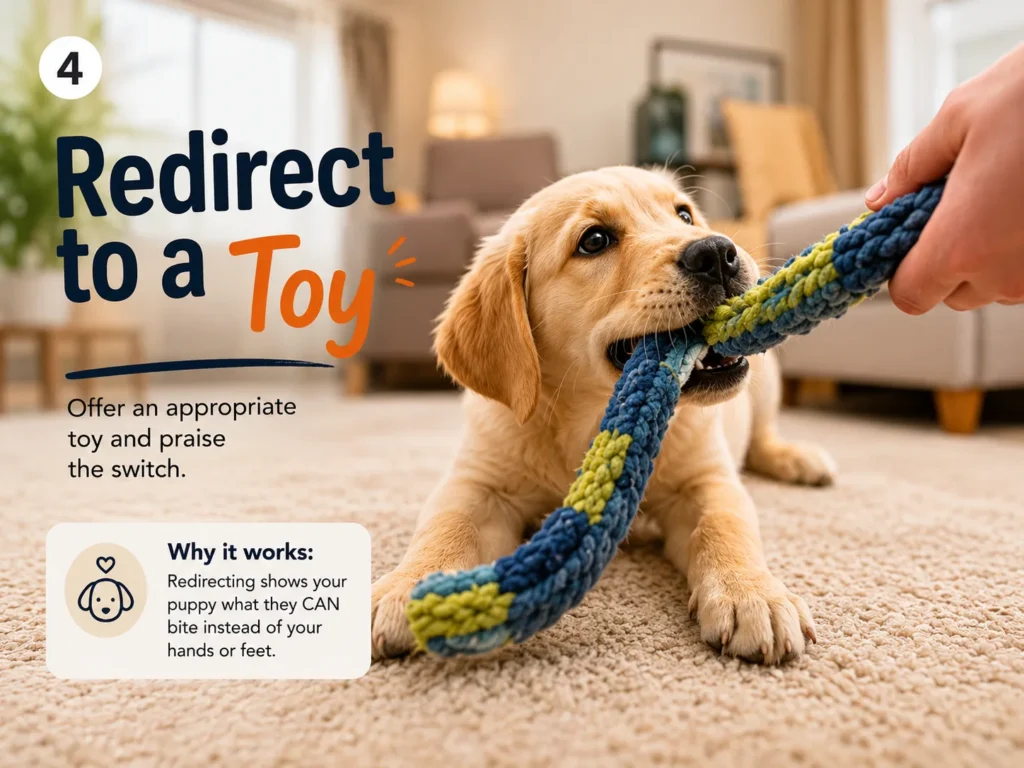
Stopping unwanted behavior is only half the job. Your puppy still has the biological need to chew. Give them something they’re allowed to bite.
As soon as your puppy lets go of your hand, immediately offer a chew toy. The timing matters. Don’t wait a minute. Don’t go searching around the house. Keep toys nearby before you begin playing. Some excellent choices include:
- Kong Puppy
- Soft rope toys
- Puppy-safe rubber toys
- Plush tug toys
- Frozen teething toys
Hold the toy low and make it move slightly. As soon as your puppy grabs the toy instead of your hand, praise enthusiastically: “Yes! Good puppy!”
Now your puppy has learned something valuable: Human skin makes the fun stop. Chew toys make the fun continue. That’s exactly the association we want.
Trainer’s Tip
Long toys are usually easier than short toys. A rope toy or long plush toy creates extra distance between your fingers and your puppy’s teeth. That makes training safer for everyone.
Case Example
A Golden Retriever puppy named Charlie loved grabbing sleeves every time visitors arrived. His owners tried saying “No!” dozens of times every evening. Nothing changed. Instead, they began keeping a rope toy beside the front door. Whenever Charlie rushed toward someone’s hands, they immediately redirected him onto the rope toy. Within about three weeks, Charlie started looking for the toy himself whenever guests entered the house. Nobody forced him. Nobody punished him. The desired behavior simply became more rewarding than biting sleeves.
Step 3: Use a Reverse Time-Out
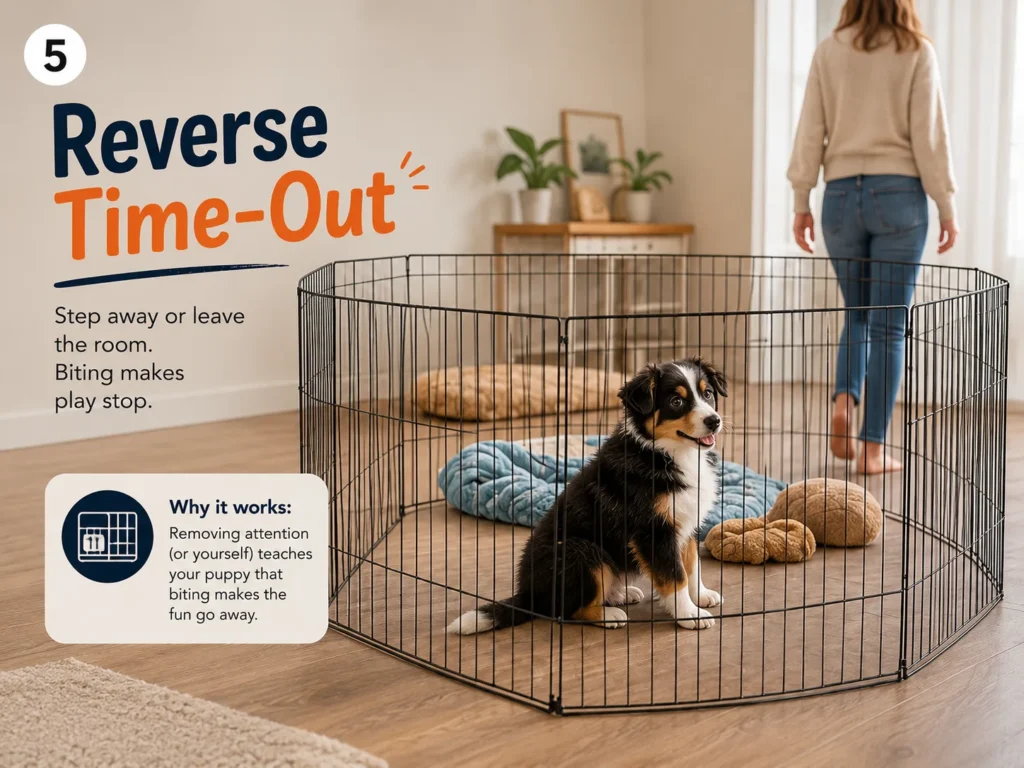
If your puppy ignores toys and continues biting, don’t argue with them. Leave.
This technique is called a Reverse Time-Out. Unlike a traditional time-out where the puppy is isolated, you remove yourself from the interaction because for most puppies, your attention is the biggest reward.
The process is simple:
- Your puppy bites.
- You quietly stand up.
- Walk behind a baby gate or leave the room.
- Close the door.
- Wait about 30 to 60 seconds.
- Then return calmly.
No lecture. No shouting. No dramatic gestures. Just a short pause. If biting starts again immediately, repeat the process. Eventually your puppy begins connecting the dots: “When I bite people, people disappear.” That’s a lesson puppies understand surprisingly quickly.
Real-Life Scenario
One Border Collie owner told me her puppy seemed to become even more excited whenever she said “Stop!” She later realized she was accidentally rewarding the behavior. Every time the puppy bit her socks, she chased him around the living room trying to get them back. To the puppy, this wasn’t punishment. It was the best game of the day. After switching to reverse time-outs, the game disappeared. Within a couple of weeks, the sock attacks became much less frequent. Nothing about the puppy changed overnight. The reward simply disappeared.
Vet Insight
The American Veterinary Society of Animal Behavior (AVSAB) recommends avoiding punishment-based techniques that rely on fear or physical force. Instead, removing attention and reinforcing desirable behaviors helps puppies learn without increasing anxiety or damaging trust.
Step 4: Catch the Good Behavior
Here’s something many owners never think about. Most puppies hear “No,” “Stop,” or “Don’t” far more often than they hear “Good choice.”
Dogs repeat behaviors that pay well. So start paying attention to the moments when your puppy makes the right decision. Maybe they:
- Walk over and sniff your hand.
- Sit politely instead of jumping.
- Lick your fingers without biting.
- Pick up their toy instead of your shoe.
- Relax beside your feet.
The moment you notice one of those behaviors, mark it (“Yes!”) and reward it with praise, a toy, or a small training treat. This is called capturing behavior, and it’s one of the fastest ways to teach puppies what you actually want. Instead of constantly correcting mistakes, you’re actively building good habits.
Trainer Observation
Progress is rarely dramatic. Yesterday your puppy may have bitten ten times during one play session. Today they only bit six times. That’s improvement. Celebrate it. Dogs don’t become polite overnight. They improve one repetition at a time.
Step 5: Don’t Underestimate the Power of Sleep
If you’ve tried every technique above and your puppy suddenly turns into what feels like a tiny tornado, ask yourself one simple question: How long has my puppy been awake?
Many young puppies struggle to regulate themselves once they’ve been awake for around two hours. Their bodies become tired. Their brains become overstimulated. Their self-control disappears. Instead of curling up for a nap like an adult dog might, they often do the exact opposite. They run faster, jump higher, and bite harder. It looks like unlimited energy. In reality, they’re running on empty.
Guide your puppy into a quiet crate or puppy playpen. Offer a frozen Kong or another safe chew. Dim the lights if possible. Leave them to settle. Many puppies fall asleep within five or ten minutes because exhaustion was the real problem all along.
Signs Your Puppy Probably Needs a Nap
Rather than another walk, watch for these clues:
| Common Sign | What It Usually Means |
| Wild zoomies | Overtired |
| Suddenly biting much harder | Overtired |
| Ignoring cues they know | Mental fatigue |
| Barking at everything | Overstimulated |
| Running from room to room | Difficulty settling |
| Can’t focus on toys | Needs rest |
Many owners accidentally make biting worse by adding more exercise when their puppy actually needs more sleep. Learning to recognize that difference is one of the biggest breakthroughs new puppy owners experience.
What NOT to Do: Mistakes That Can Make Puppy Biting Worse
When owners search for advice online, they often find outdated training methods that promise quick results. Unfortunately, some of those methods can actually slow your puppy’s progress or even create new behavior problems. Here are the biggest mistakes professional trainers recommend avoiding.
Don’t Use Physical Punishment
When a puppy bites hard, it’s natural to feel frustrated. But reacting physically usually creates more problems than it solves. Avoid:
- Hitting your puppy
- Smacking their nose
- Holding their mouth shut
- Pinning them to the floor (“alpha roll”)
- Grabbing the scruff of their neck
- Shouting loudly in their face
These techniques may stop the behavior for a moment because the puppy becomes startled. That isn’t learning. It’s fear.
According to the American Veterinary Society of Animal Behavior (AVSAB), punishment-based training increases the likelihood of fear, anxiety, and defensive behaviors while reducing trust between dogs and their owners. In other words, your puppy might stop biting because they’re scared of you, not because they’ve learned what you actually want. Long term, that’s a much bigger problem.
Vet Insight
Puppies learn far more effectively when they understand which behavior earns rewards than when they’re simply punished for making mistakes. Positive reinforcement doesn’t mean allowing bad behavior. It means clearly teaching better alternatives.
Don’t Turn Your Hands Into Toys
This one sounds obvious, but it’s surprisingly common. Many families spend weeks teaching their puppy not to bite… then someone sits on the floor and starts wrestling with the puppy using their hands.
From the puppy’s perspective, the rules suddenly changed. Yesterday, hands were off limits. Today, hands are exciting chew toys. Tomorrow, hands are forbidden again. That inconsistency makes learning much harder. Everyone in the household should follow the same rules. If children play with the puppy, teach them to use toys rather than fingers. Consistency beats intensity every time.
Don’t Expect Progress Overnight
Puppies don’t wake up one morning and suddenly understand perfect manners. Behavior changes gradually. Some days your puppy may barely bite at all. The next day they seem to forget everything you’ve taught them. That’s completely normal. Learning isn’t a straight line. Look for trends instead of perfect days. If your puppy bites eight times today instead of twelve yesterday, you’re already moving in the right direction.
The Ultimate Puppy Teething Toolbox
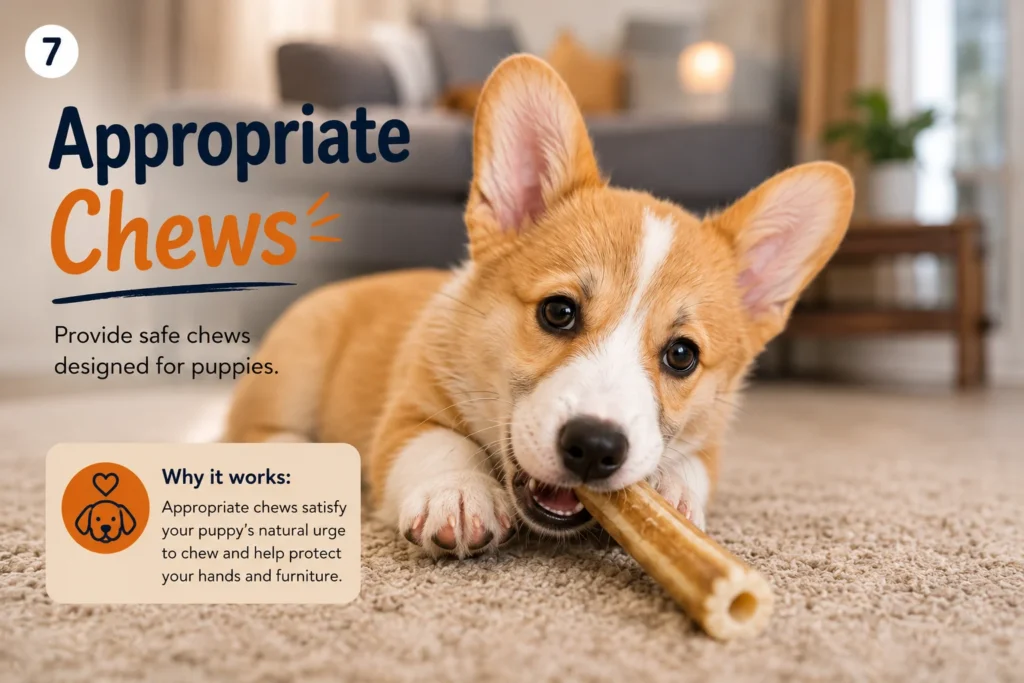
Training works best when puppies have safe ways to satisfy their natural urge to chew. The goal isn’t to stop chewing. It’s to redirect it toward appropriate objects. Here are three trainer favorites.
1. The Frozen Washcloth Trick
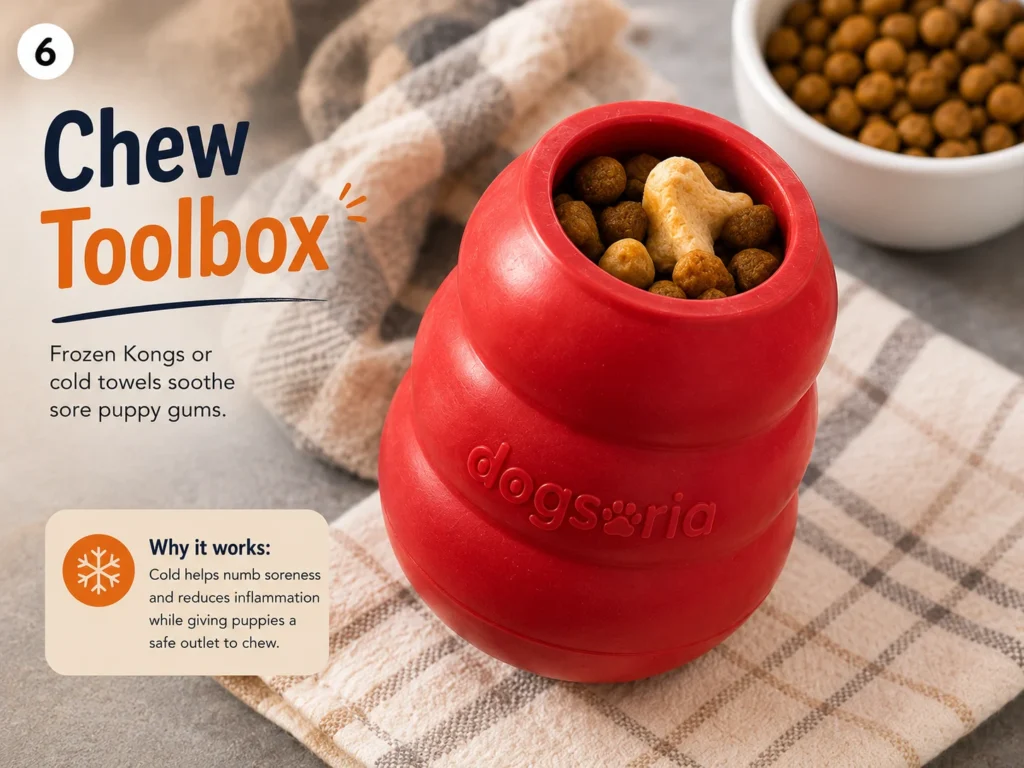
Sometimes the simplest ideas work surprisingly well. Take a clean cotton washcloth, soak it in water, wring out the excess, tie a loose knot, and freeze it for about an hour. The cold temperature helps numb sore gums while the fabric provides a soft texture that’s satisfying to chew. Always supervise your puppy while they’re using it, and replace the towel if it begins to tear.
2. A Stuffed Frozen Kong
Ask ten professional trainers for their favorite puppy toy, and you’ll probably hear the word Kong several times. To boost your dog nutrition and keep things healthy, fill a Kong Puppy toy with safe ingredients such as:
- Wet puppy food
- Plain canned pumpkin
- Mashed banana
- Soaked puppy kibble
Freeze it overnight. Instead of chewing your furniture, your puppy may happily spend 20 to 40 minutes licking and chewing the toy. That mental exercise is often just as valuable as physical exercise.
Safety Reminder
If you use peanut butter, always check the ingredient list first. Never use products containing xylitol (sometimes listed as birch sugar), as it is highly toxic to dogs.
3. Puppy-Safe Dental Chews
Not every chew toy is suitable for growing teeth. Choose products specifically designed for puppies. Avoid:
- Cooked bones
- Deer antlers
- Extremely hard nylon chews
- Hooves
These may be harder than developing puppy teeth and can increase the risk of fractures. When choosing a chew, look for products recommended for your puppy’s age and chewing strength.
Is It Normal Puppy Play or Real Aggression?
Few things worry new owners more than hearing a puppy growl. But here’s something many people don’t realize: puppies growl during play all the time. Growling alone does not automatically mean aggression. The secret is to watch the entire body, not just the mouth.
Signs of Normal Play
Healthy play usually looks relaxed and bouncy. Your puppy may:
- Bounce toward you
- Pause frequently
- Wiggle their whole body
- Chase a toy one moment and you the next
- Perform a classic play bow with their front legs lowered and their rear end raised
- Easily switch from biting your sleeve to grabbing a toy
Even playful growling can sound surprisingly dramatic. That’s normal.
Red Flags That Deserve Professional Advice
Contact your veterinarian or a qualified behavior professional if your puppy regularly shows several of these signs together:
- A stiff, frozen body posture
- Hard, unblinking eye contact
- Deep, continuous growling
- Lunging without playful body language
- Resource guarding food or toys
- Snapping without warning
- Bites that become increasingly severe despite consistent training
True aggression in young puppies is uncommon, but early intervention is always better than waiting for the behavior to become established.
Final Thoughts
If there’s one thing I hope you remember after reading this guide, it’s this: Puppy biting is a stage, not a personality trait.
Your puppy isn’t trying to dominate you. They’re learning how to communicate, exploring the world, coping with teething discomfort, and figuring out which behaviors make life rewarding. That process takes time. Some puppies improve within a couple of weeks. Others need a little longer. Both are normal.
The owners who see the best results usually aren’t the ones with the “perfect” puppy. They’re the ones who stay calm, stay consistent, and respond the same way every single time. One gentle correction. One redirected toy. One successful training session. Those small moments add up.
Months from now, you probably won’t remember every bite mark on your hands. But your dog will remember the habits you helped them build during puppyhood. Explore our homepage at Dogsoria for more resources on raising a happy, healthy pup.
Frequently Asked Questions
At What Age Do Puppies Usually Stop Biting?
Most puppies begin biting less between four and six months of age as adult teeth replace baby teeth and consistent training takes effect. Some excitement-related mouthing may continue beyond six months, especially in energetic breeds, but the painful teething bites usually decrease significantly.
Should I Yelp Every Time My Puppy Bites?
A short, high-pitched “Ouch!” can work well for many puppies because it mimics the feedback they receive from littermates. However, some puppies become even more excited by the sound. If that happens repeatedly, stop using the yelp and move directly to ending the interaction with a reverse time-out.
Will My Puppy Grow Out of Biting Without Training?
Not completely. Teething will eventually end, but puppies still need guidance to learn bite inhibition and appropriate play. Without training, some dogs simply replace puppy biting with rough adult mouthing.
Should I Use Bitter Apple Spray?
Bitter Apple Spray can help discourage chewing on furniture, shoes, or table legs. It should not replace behavior training. Your puppy still needs to learn what they should chew, not just what tastes unpleasant.
Is It Ever Too Late to Teach Bite Inhibition?
No. Puppies learn fastest during early development, but adolescent and adult dogs can still improve with consistent reward-based training. Starting earlier simply makes the process easier.
When Should I Call a Professional Trainer?
Consider seeking professional help if:
- Biting becomes more severe over time.
- Your puppy regularly breaks skin.
- They guard food or toys aggressively.
- The behavior is accompanied by stiff body language or intense growling.
- You’re feeling overwhelmed or unsure how to continue training.
Early guidance often prevents much larger problems later.
Medical Review & Editorial Policy
Reviewed Using Veterinary & Behavior Resources
This article was researched using guidance from licensed veterinarians, veterinary behavior organizations, and certified canine training resources. It is intended for educational purposes only and should not replace individualized veterinary advice.
If your puppy’s biting is accompanied by sudden behavioral changes, illness, severe aggression, or repeated injuries, consult your veterinarian or a qualified veterinary behaviorist.
Last Updated: June 2026
References
- American Veterinary Society of Animal Behavior (AVSAB). Position Statement on Puppy Socialization.https://avsab.org/resources/position-statements/
- International Association of Animal Behavior Consultants (IAABC). Puppy Behavior Resources.https://iaabc.org
- VCA Animal Hospitals. Puppy Behavior and Training.https://vcahospitals.com
- Cornell Richard P. Riney Canine Health Center.https://www.vet.cornell.edu/
- PetMD. Puppy Biting and Teething Resources.https://www.petmd.com
- Humane World for Animals. Puppy Training Advice.https://www.humaneworld.org
- Tufts University Cummings School of Veterinary Medicine. Petfoodology.https://vetnutrition.tufts.edu