Dog Breeds Guide
When Is a Dog Considered an Adult?
Your dog may look grown up b…
DOGSORIA DOG CARE GUIDE
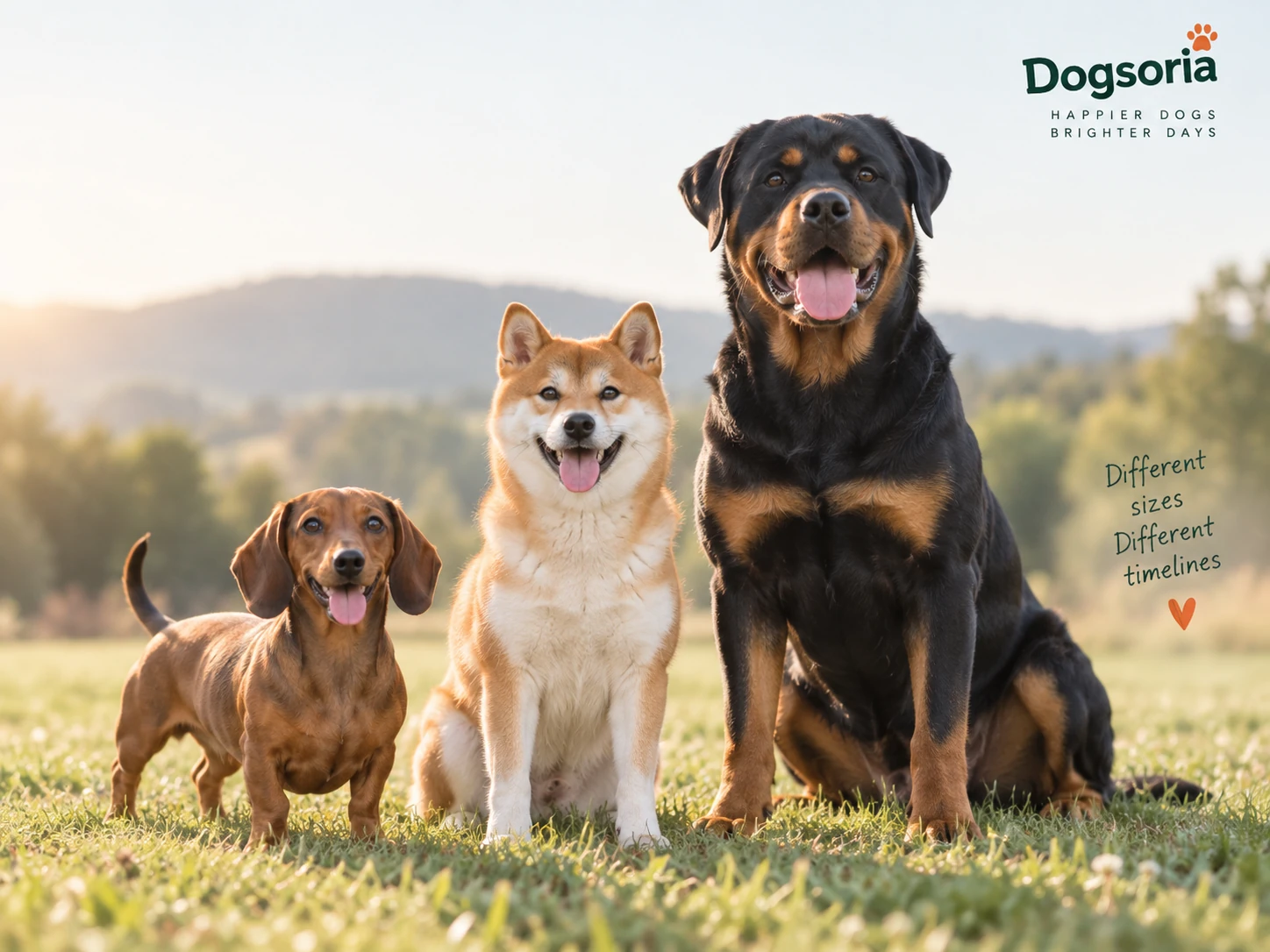
Your dog may look grown up but still act like a puppy. Both can be true.
QUICK ANSWER
The short answer
Most dogs are considered adults between about 12 and 24 months old.
Small dogs often reach adult size around their first birthday or earlier. Medium dogs commonly mature around 12 to 15 months. Large and giant dogs usually take longer and may not be fully grown until about 15 to 24 months.
QUICK FACTS
12-24 months
Most dogs reach adulthood
15-24 months
Large dogs may still be growing
18-36months
Behavior may keep maturing
Your dog may look grown up but still act like a puppy. Both can be true.
Overview
So, when is a dog considered an adult? Most dogs move into adulthood between about 12 and 24 months, but the answer changes with their expected adult size, breed, and the type of maturity you mean.
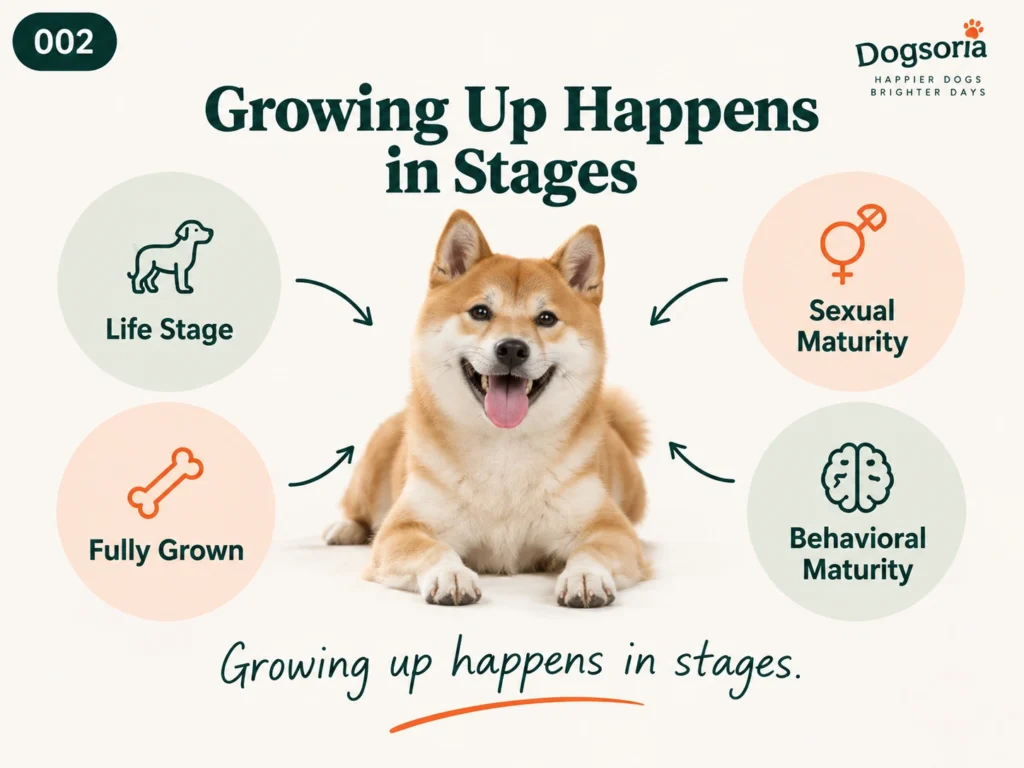
A dog can be an adult for life-stage purposes before they are fully grown. They can become sexually mature before their body finishes developing. And they can reach adult size while still behaving like a teenager.
Important planning details
The important distinction is this: adult, fully grown, sexually mature, and behaviorally mature do not always mean the same thing.
Quick Facts
- Most dogs are considered adults: 12-24 months
- Large dogs may still be growing: 15-24 months
- Behavior may keep maturing: 18-36 months
What Does a “Young Adult” Result Mean?
Dogsoria’s Dog Age Calculator uses your dog’s age and expected adult size to place them in a practical life stage.
A Young Adult result usually means your dog is moving beyond early puppyhood. It does not automatically mean they have stopped growing, reached full behavioral maturity, or need an immediate change in food.
For many dogs, especially large and giant breeds, young adulthood is still a time for steady training, appropriate exercise, and regular growth checks.
Why Is There No Single Age When Every Dog Becomes an Adult?
Different people use the word “adult” to mean different things. That is why one source may call a dog adult at one year old while another says the same dog is still growing.
| Type of Maturity | What It Means | When It Usually Happens |
|---|---|---|
| Life-stage adulthood | Your dog is moving out of puppyhood for practical care and planning. | Often between 12 and 24 months |
| Full physical growth | Adult height, body frame, weight, and muscle are largely developed. | Earlier for small dogs; later for large and giant dogs |
| Sexual maturity | Your dog may be capable of reproduction. | Often before full physical maturity |
| Behavioral maturity | Your dog becomes more settled, consistent, and socially mature. | Often later than physical growth |
| Nutritional adulthood | Your dog may be ready to move from growth food to adult maintenance food. | Depends on expected adult size and growth progress |
A dog may reach one of these milestones without reaching all of them. That is normal.
When Is a Dog Considered an Adult by Size?
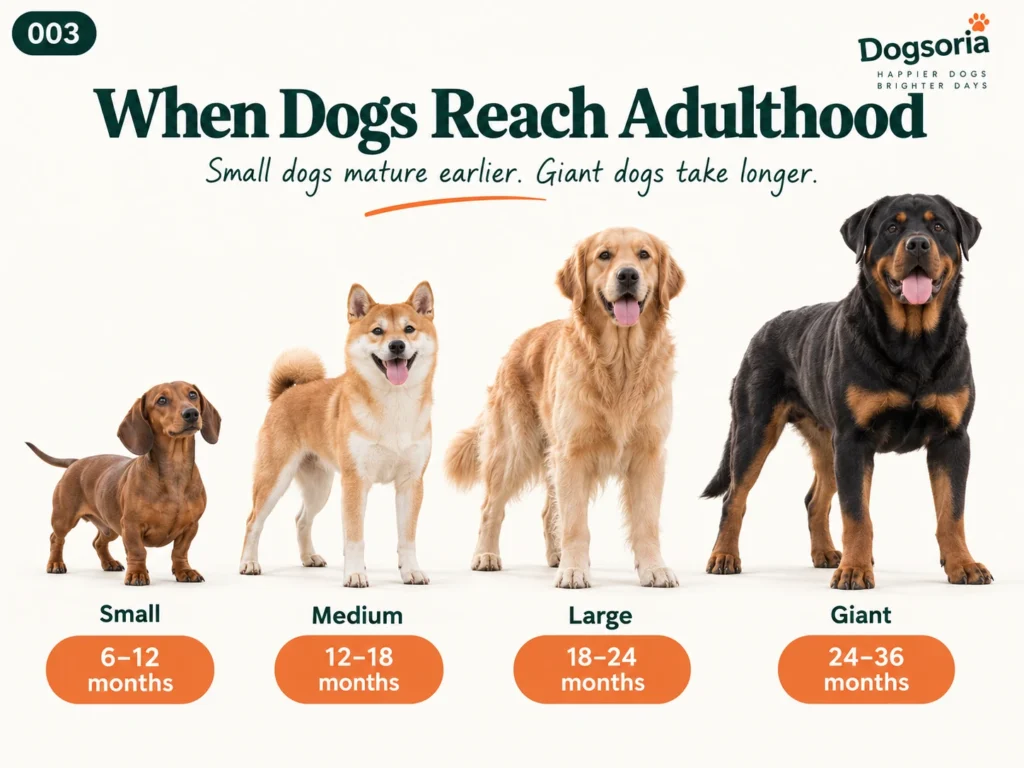
Expected adult size is one of the clearest ways to estimate when a dog will mature. Exact size categories differ between sources, so use these ranges as practical guidance rather than strict deadlines.
| Dog Size | Usually Considered Adult | Usually Fully Grown | What Owners Should Know |
|---|---|---|---|
| Toy / extra-small | About 8–10 months | Often by about 6–10 months | Physical growth tends to finish early. |
| Small | About 10–12 months | Often by about 8–12 months | Behavior may continue developing after adult size is reached. |
| Medium | About 12–15 months | Often by about 12–15 months | Many reach adult size around the one-year mark. |
| Large | About 15–18 months | Often around 15–24 months | They may reach height before fully filling out. |
| Giant | About 18–24 months | Often around 18–24 months | They need the longest growth period and careful development support. |
When Are Small Dogs Fully Grown?
Small dogs usually finish growing sooner because they have less body mass to develop. Many are close to adult size by their first birthday.
However, reaching adult size does not mean a dog will instantly become calmer or fully trained. Young small dogs can still be energetic, playful, and easily distracted.
When Are Medium Dogs Fully Grown?
Medium dogs often reach adult size between about 12 and 15 months. They may look nearly grown at one year old, then continue developing adult muscle and body proportions over the following months.
When Are Large Dogs Fully Grown?
Large dogs often take longer than owners expect. A one-year-old Golden Retriever, Labrador Retriever, or German Shepherd may be close to adult height but still be growing in body weight, muscle, and overall proportion.
Many large dogs are fully grown between about 15 and 24 months.
When Are Giant Dogs Fully Grown?
Giant dogs, including Great Danes, Mastiffs, and Saint Bernards, usually have the longest growth timeline. They may not reach adult size until around 18 to 24 months.
Looking large does not necessarily mean a giant-breed dog has completed physical development. Their exercise, food, and body condition should still be managed carefully during this stage.
For the complete month-by-month journey from birth to adulthood, see our Puppy Development Stages Guide.
Is Being an Adult the Same as Being Fully Grown?
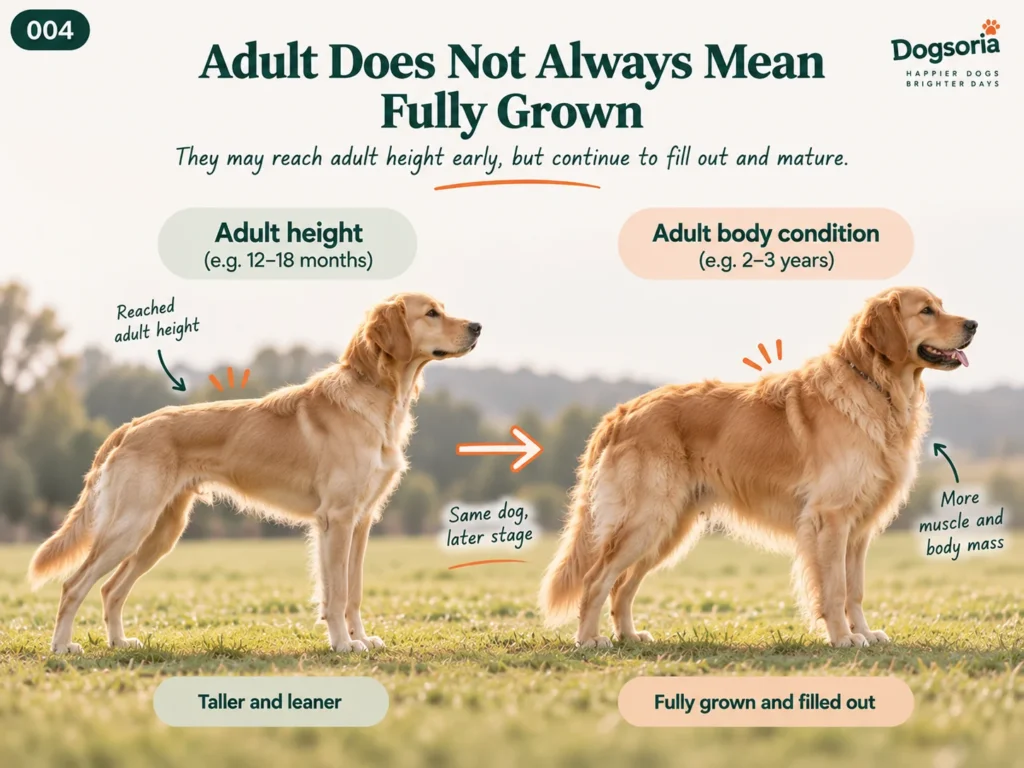
No. This is one of the biggest sources of confusion for dog owners.
A dog can be considered an adult by age or life stage while still changing physically. Many dogs reach adult height first, then continue to fill out in muscle, chest width, and adult body weight.
A young large-breed dog may look tall and lanky at 12 months. Over the next several months, their frame may become more balanced and muscular even if they are no longer getting taller.
When Do Dogs Stop Growing?
When people ask when dogs stop growing, they usually mean physical growth rather than behavior.
As a broad guide:
- Small dogs often stop growing between about 8 and 12 months.
- Medium dogs often stop growing between about 12 and 15 months.
- Large dogs may continue growing or filling out until around 18 to 24 months.
- Giant dogs often need around 18 to 24 months to reach adult size.
Your dog’s breed, genetics, sex, diet, and health can affect the timeline. If you have a mixed-breed dog or are unsure how large they will become, your veterinarian can offer more individual guidance.
Why Does My Adult Dog Still Act Like a Puppy?
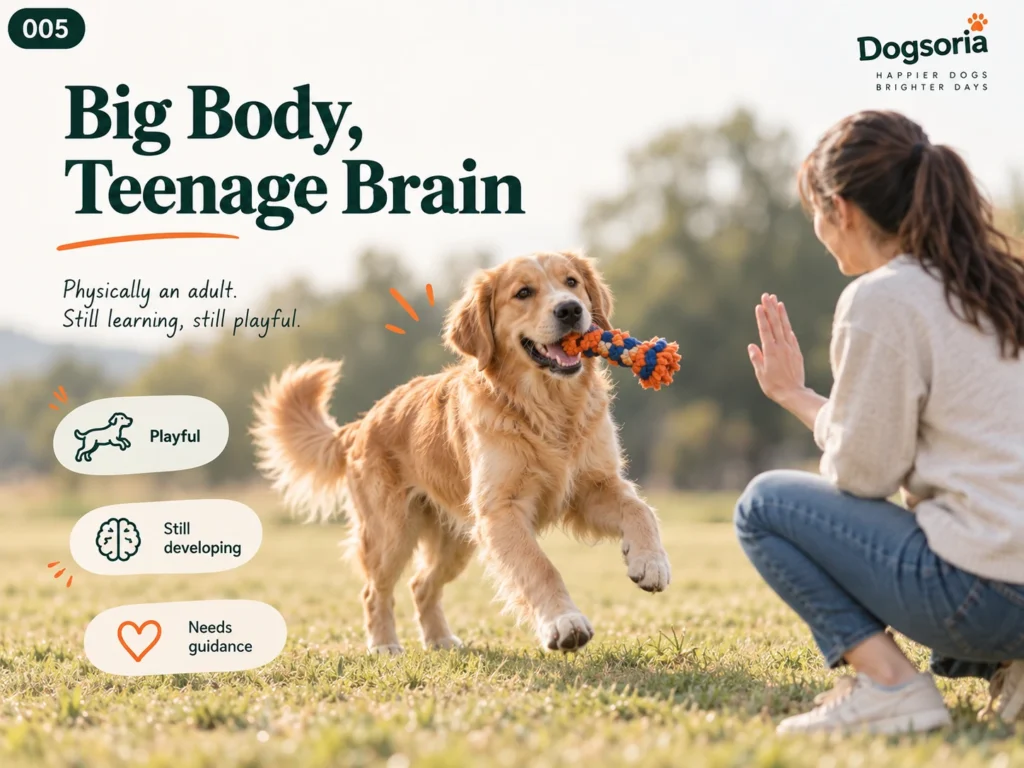
A dog can finish much of their physical growth before their behavior fully settles.
Adolescence often begins around six months of age and can continue well into the second year of life. During this stage, dogs may have high energy, inconsistent training performance, changing social behavior, and a stronger desire to test boundaries.
Your dog may understand a cue such as “come” or “stay” but struggle to follow it in an exciting environment. That does not necessarily mean they are being stubborn or that training has failed. It usually means they need more consistent practice.
When Do Dogs Mentally Mature?
There is no single age when every dog becomes mentally mature.
Many dogs become more settled between about 18 and 36 months, but size, breed tendencies, training, social experiences, and individual temperament all matter.
Instead of waiting for your dog to “grow out of” puppy-like behavior, keep practicing the skills you want them to carry into adulthood:
- calm greetings;
- loose-leash walking;
- recall around distractions;
- settling at home;
- appropriate play and social boundaries.
Signs Your Dog May Be Approaching Adulthood
No one physical or behavioral change can confirm that a dog has completed every type of maturity. But these signs can show that puppyhood is gradually transitioning into young adulthood.
Physical Signs
- Growth is slower and less noticeable than before.
- Weight gain becomes more gradual.
- Your dog looks less lanky or disproportionate.
- Adult muscle and body proportions become more visible.
Behavioral Signs
- Your dog can focus for longer during training.
- They recover from excitement more easily.
- Their energy pattern becomes more predictable.
- Social interactions become less frantic or intense.
These changes happen gradually. A dog can become calmer in one area while still being playful and excitable in another.
When Should a Puppy Switch to Adult Food?
The right time to switch from puppy food to adult food depends on when your dog is expected to reach adult size.
Small dogs often transition earlier. Large and giant-breed puppies may need growth-appropriate food longer because their bodies are still developing after their first birthday.
Do not switch food only because your dog has turned one. Consider:
- your dog’s expected adult size;
- current growth and body condition;
- the food label’s life-stage guidance;
- your veterinarian’s recommendation.
How to Transition From Puppy Food to Adult Dog Food
A gradual transition can help reduce digestive upset. A common approach is to change food over about seven to ten days:
- Days 1–3: mostly puppy food with a small amount of adult food
- Days 4–6: about half puppy food and half adult food
- Days 7–9: mostly adult food with a small amount of puppy food
- Day 10: adult food only, if your dog is tolerating the change well
If your dog develops vomiting, diarrhea, a marked appetite change, or other concerning symptoms, contact your veterinarian.
What Should You Do During Your Dog’s Young Adult Stage?
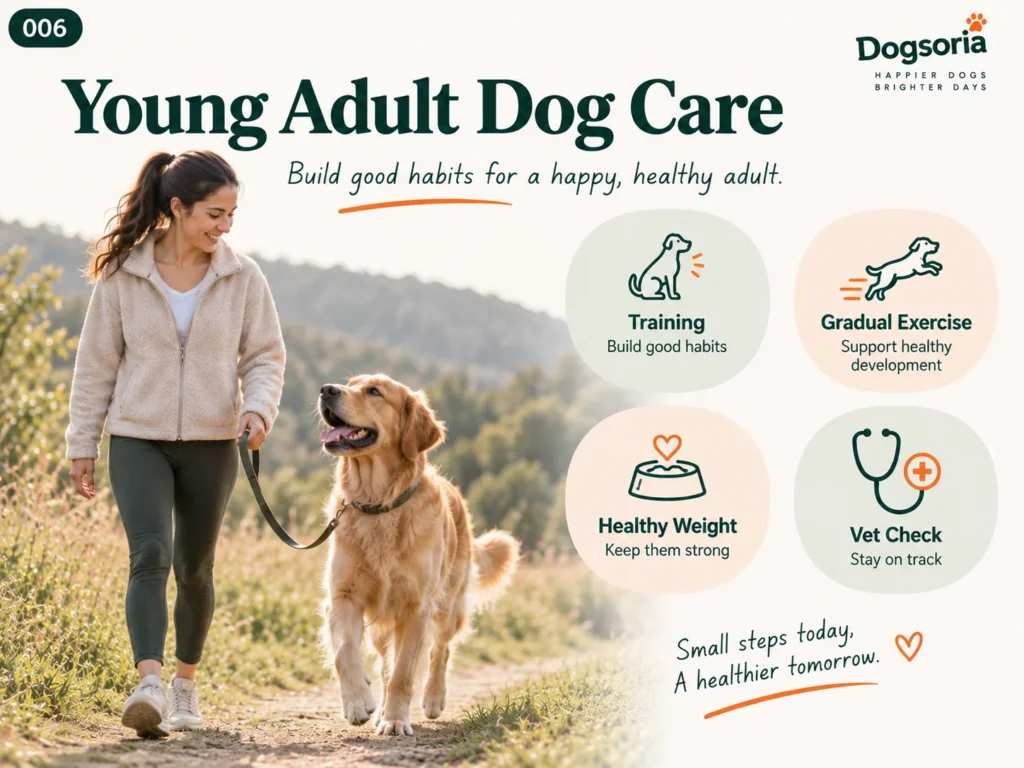
Young adulthood is when puppy routines begin turning into adult habits.
Keep Training Through Adolescence
Continue practicing recall, loose-leash walking, calm greetings, and settling around distractions. Consistent positive reinforcement helps adolescent behavior become more reliable adult behavior.
Increase Exercise Gradually
As your dog grows, their activity needs may change. But do not rush large or giant breeds into repetitive, high-impact exercise simply because they look fully grown.
Ask your veterinarian for guidance before introducing intense running, agility, long-distance hiking, or other demanding activities.
Monitor Weight and Body Condition
When rapid growth slows, calorie needs may change too. Monitor your dog’s body condition instead of relying only on the number on the scale.
In general, you should be able to feel your dog’s ribs without pressing hard, and they should have a visible waist when viewed from above.
Review Food and Preventive Care
A young adult wellness visit is a useful time to discuss body condition, diet, dental care, exercise, parasite prevention, and any behavior concerns.
FAQ
Frequently asked questions
Is a 1-year-old dog still a puppy?
A one-year-old dog is often considered a young adult for practical life-stage purposes. However, large and giant breeds may still be growing physically, and many dogs are still behaviorally adolescent at this age.
Is a 2-year-old dog still a puppy?
Most dogs are no longer puppies at two years old. Some giant breeds may still be finishing physical development, and some dogs may still show adolescent-like behavior. That does not mean they are not adults.
When do dogs stop growing?
Small dogs often stop growing between about 8 and 12 months. Medium dogs commonly finish around 12 to 15 months. Large and giant dogs may take around 18 to 24 months to reach adult size.
When do dogs mentally mature?
Many dogs become more behaviorally settled between about 18 and 36 months, but there is no exact age. Breed tendencies, training, social experiences, and individual temperament all affect the timeline.
Can a dog be sexually mature but still be a puppy?
Yes. A dog can become capable of reproduction before they have completed physical growth or behavioral development. Sexual maturity is not the same as being fully grown.
Additional FAQ content to review
When should puppies switch to adult food?
The transition depends on expected adult size and growth progress. Small dogs often switch earlier, while large and giant breeds may need growth-appropriate food longer. Check the food label and ask your veterinarian when uncertain.
SOURCES
Sources & scientific references
- American Kennel Club — Puppy Growth Chart: When Does My Puppy Finish Growing?
- Royal Canin — When Does My Puppy Become an Adult Dog?
- Hill’s Pet — When Is a Puppy an Adult Dog?
- PetMD — When Should You Switch From Puppy to Adult Dog Food?
- Cornell University College of Veterinary Medicine — The Teenage Years
- RSPCA — Managing Your Adolescent Puppy
MORE FROM THIS CATEGORY