
Dog Breeds Guide
Mature Dog Age and Care: Keeping Your Dog Healthy Through the Mature Years
Your dog may still race to t…
DOGSORIA DOG CARE GUIDE
Your dog may still race to the door when it is time for a walk, bring you the same favorite toy, and act nothing like an “older dog.” So seeing Mature Adult in a dog age calculator can feel surprising.
QUICK ANSWER
The short answer
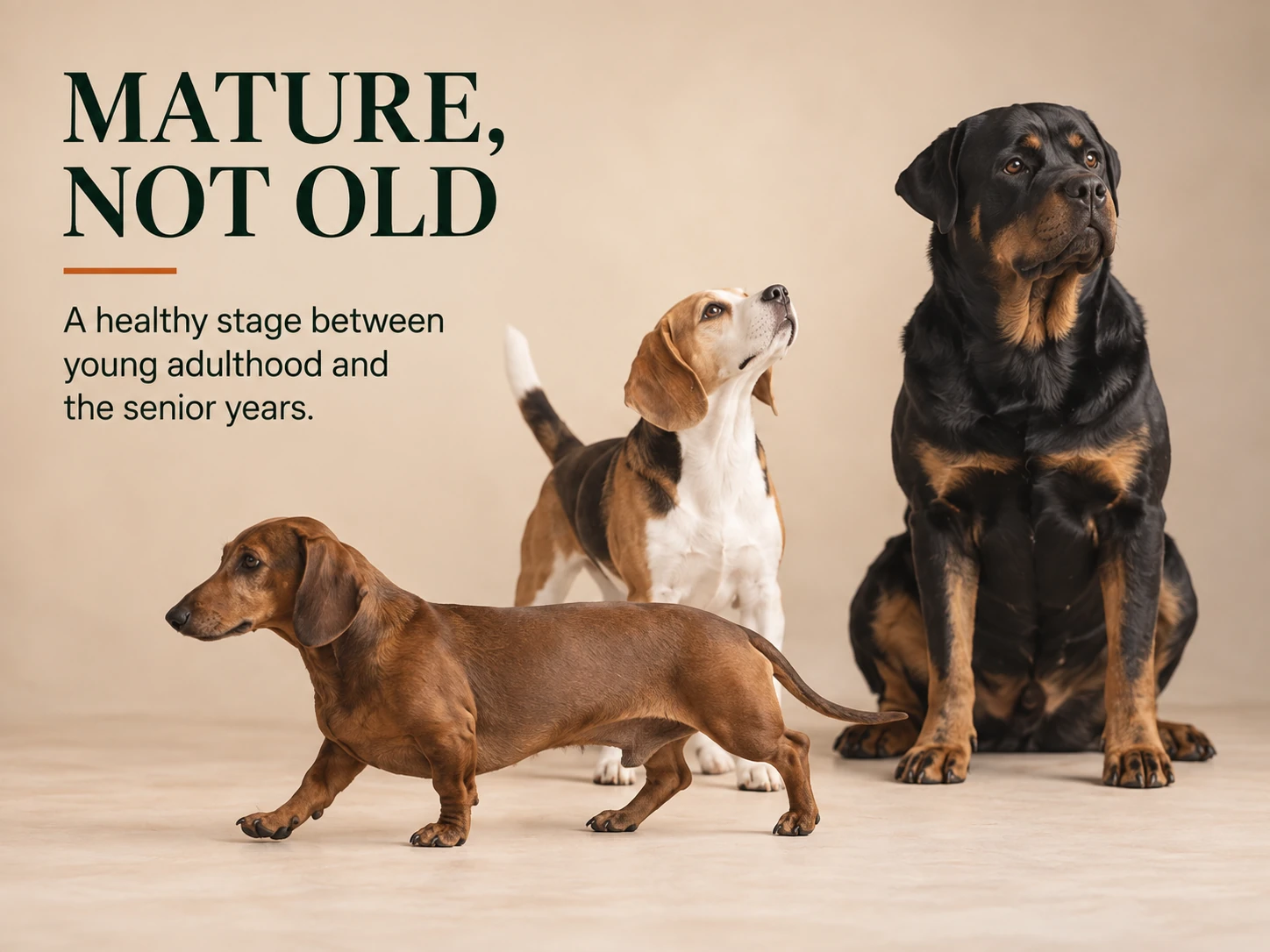
A mature adult dog has completed physical and social maturation but has not yet entered the final portion of their expected lifespan. The American Animal Hospital Association defines mature adulthood as the period from full maturity until the beginning of the last 25% of a dog’s estimated lifespan. Because larger dogs generally have shorter lifespans than smaller dogs, they usually reach both mature adulthood and the senior stage earlier. Mature adulthood is a useful healthcare framework—not a diagnosis or a fixed age that applies to every dog.
QUICK FACTS
No fixed age
TMature adulthood varies by breed, size, health, and expected lifespan.
4–7 years
A common example for medium-sized dogs—not a universal age range.
Not senior yet
Mature dogs are in their middle years, when subtle changes may begin.
Your dog may still race to the door when it is time for a walk, bring you the same favorite toy, and act nothing like an “older dog.” So seeing Mature Adult in a dog age calculator can feel surprising.
Overview
Mature adult does not mean senior, and it does not mean that your dog has suddenly become old. It describes the period after a dog has completed physical and social maturation but before the senior stage begins. During these years, the goal shifts from supporting growth to protecting long-term health, maintaining muscle and mobility, and noticing small changes before they become bigger problems.
There is no single birthday when every dog enters or leaves this stage. Size, breed, expected lifespan, lifestyle, and individual health all affect how quickly a dog matures and ages.
Quick Facts
- Mature adult is not the same as senior. It is the stage between full maturity and the senior years.
- There is no universal mature-adult age. Breed, size, expected lifespan, and health all matter.
- Most dogs complete physical and social maturation by about 3–4 years, although individual development varies.
- Large and giant dogs generally age faster and enter later life stages earlier than smaller dogs.
- A life-stage label should not automatically trigger a food change. Nutrition should reflect body condition, activity, health, and veterinary advice.
- Changes should be judged against your dog’s normal baseline. Sudden or persistent changes deserve veterinary attention.
What Is a Mature Adult Dog?
The term mature adult dog is part of a life-stage framework used to organize preventive healthcare. The 2019 AAHA Canine Life Stage Guidelines divide a dog’s life into four main stages before end of life:
- Puppy
- Young Adult
- Mature Adult
- Senior
In this framework, young adulthood lasts from the end of rapid growth until physical and social maturation is complete—usually by about 3–4 years for most dogs. Mature adulthood then continues until the dog enters the last 25% of their estimated lifespan. That final quarter is considered the senior stage.
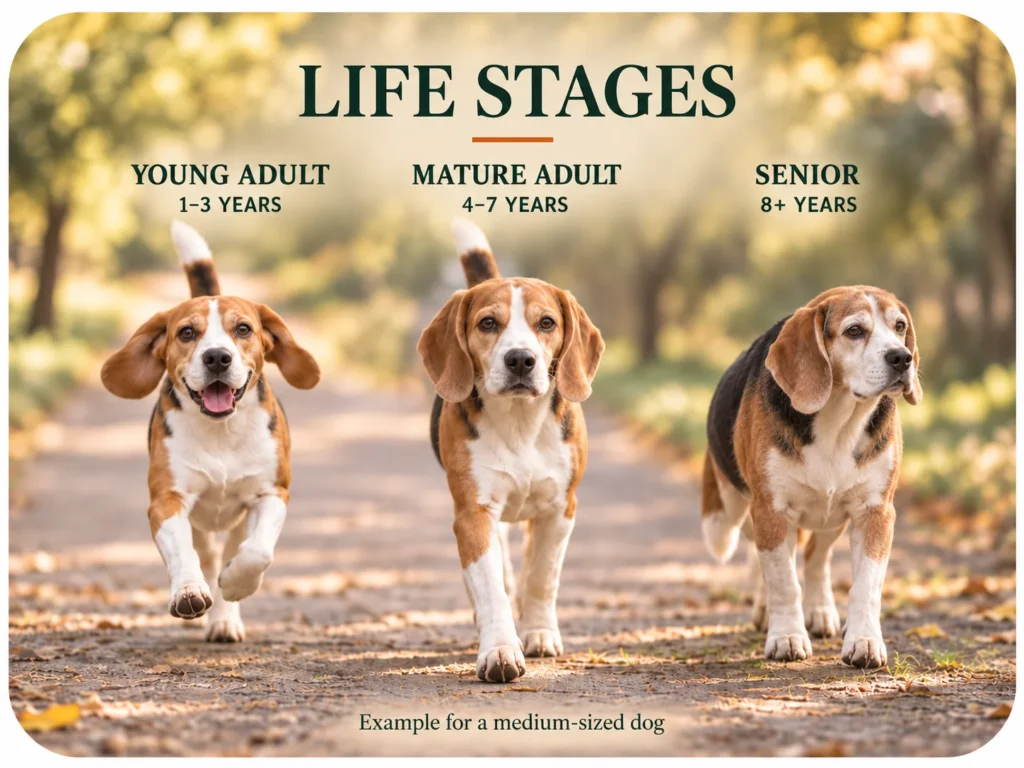
These boundaries are intentionally broad. Dogs do not move from one stage to another overnight, and veterinary organizations do not assign one universal age to every breed. A healthy six-year-old Chihuahua and a six-year-old Great Dane may be the same chronological age but at very different points in their expected lifespans.
The practical meaning is simple: your dog is no longer developing like a young adult, but they may not need senior-level care yet. This is the ideal time to protect the health they already have and establish a clear baseline for the years ahead.
When Does a Dog Become a Mature Adult?
There is no single answer such as “all dogs become mature at age seven.” AAHA does not recommend one inclusive age range for mature adult and senior dogs because variation increases later in life.
A dog generally enters mature adulthood after completing physical and social maturation. For many dogs, that happens around 3–4 years of age. The end of mature adulthood depends much more heavily on expected lifespan.
As a general pattern:
| Dog Size | Mature Adult Pattern | Senior Transition Pattern |
|---|---|---|
| Small dogs | Usually remain mature adults longer | Often enter the senior stage later |
| Medium dogs | Usually fall between small and large dogs | Timing varies by breed and health |
| Large dogs | Often enter mature adulthood and seniorhood earlier | Commonly become seniors earlier than small dogs |
| Giant dogs | May have a relatively short mature-adult period | Can enter the senior stage much earlier |
Some organizations publish example age ranges, but those ranges are not identical. For example, Embark places mature adulthood at approximately 5–11 years for small dogs, 4–9 for medium dogs, 3–8 for large dogs, and 3–6 for giant dogs. Other brands begin using “mature” at around age five for large dogs and seven for smaller dogs. These differences are exactly why an age range should be treated as a guide rather than a medical cutoff.
If the Dogsoria Dog Age Calculator identifies your dog as Mature Adult, the result is an estimate based on age and size. Your veterinarian can refine that picture using breed, body condition, medical history, lifestyle, and current health.
Why Do Larger Dogs Reach Later Life Stages Earlier?
Large dogs often take longer to finish growing, yet they generally have shorter average lifespans and age faster after reaching adulthood. Small dogs usually finish growing earlier and often live longer.
This creates an important distinction:
- Finishing growth later does not mean aging later.
- Chronological age alone does not define life stage.
- The same birthday can mean different things for different-sized dogs.
That is why a universal “seven-year rule” is too simple. A giant dog may already be entering the senior stage at an age when a small dog is still comfortably within mature adulthood.
Mature Adult vs. Young Adult vs. Senior
The difference is not just the number of candles on a birthday treat. Each stage changes what owners and veterinary teams should pay attention to.
| Life Stage | What It Means | Main Health Focus |
|---|---|---|
| Young Adult | Rapid growth has ended, but physical or social maturity may still be developing | Building stable routines, maintaining training, supporting adult nutrition and activity |
| Mature Adult | Physical and social maturity is complete, but the dog has not entered the final quarter of expected lifespan | Maintaining healthy weight and muscle, establishing health baselines, detecting subtle changes early |
| Senior | The dog has entered approximately the final 25% of expected lifespan | More frequent monitoring, comfort, mobility, sensory and cognitive changes, and age-related disease management |
A mature adult dog may look and behave much like a younger adult. The change is mainly in healthcare strategy: this is when tracking trends becomes increasingly valuable.
What Changes During the Mature Adult Years?
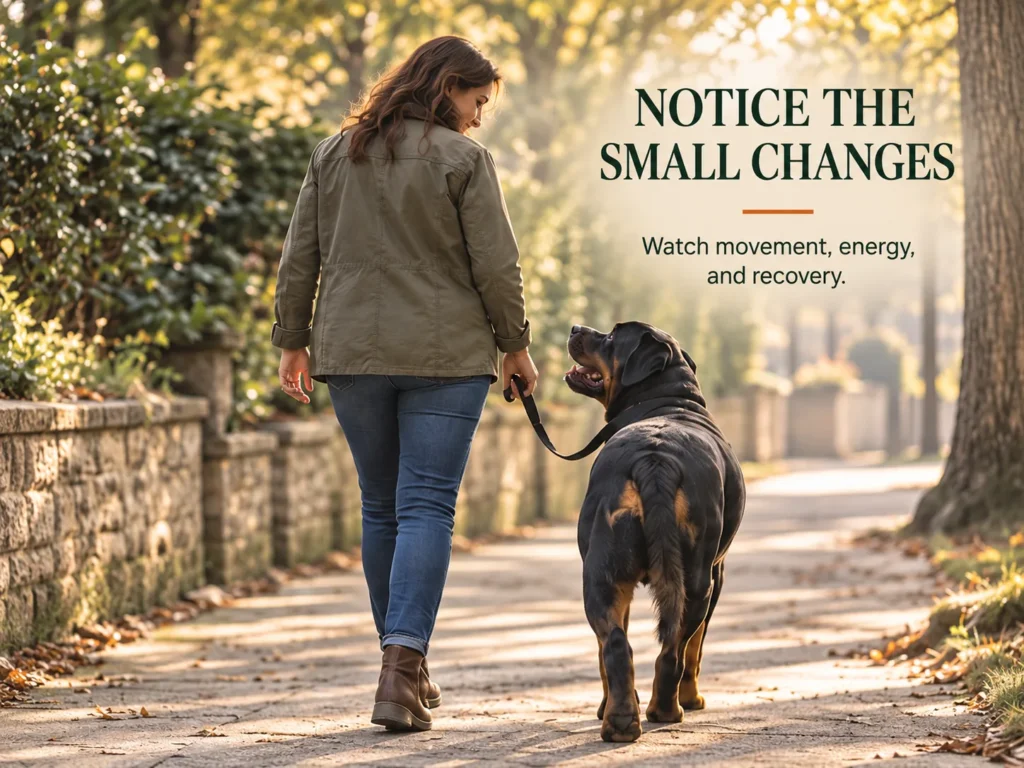
Not every mature adult dog will slow down or develop visible changes. The most useful comparison is not your dog versus another dog—it is your dog today versus their own normal pattern. Unlike the young adult stage, mature adulthood is usually marked by greater behavioral stability and the first subtle age-related changes.
Weight and Body Condition
Energy needs and activity levels can change with age. Some dogs gradually gain fat even though their meals have stayed the same. Others lose weight or muscle because of an underlying health problem.
Monitor more than the number on the scale. Ask your veterinarian about your dog’s body condition score and muscle condition. At home, notice whether you can still feel the ribs without pressing hard, whether the waist remains visible, and whether the muscles over the back and hind legs appear stable.
Energy and Exercise Recovery
Mature adult dogs still need regular physical activity. Many can continue hiking, swimming, running, playing, or participating in dog sports when those activities suit their health and conditioning.
Pay attention to changes such as taking longer to recover, stopping earlier on walks, hesitating before jumping, or avoiding an activity that used to be easy. One tired day may mean very little. A repeated change creates a pattern worth discussing with your veterinarian.
Teeth and Oral Health
Dental disease becomes more common as dogs age, but bad breath, painful chewing, bleeding gums, and loose teeth should not be dismissed as normal aging.
Continue home dental care and veterinary oral examinations. If your dog begins dropping food, chewing on one side, refusing hard treats, pawing at the mouth, or resisting face handling, arrange a veterinary assessment.
Mobility and Joint Comfort
Early mobility changes can be subtle. You may notice that your dog stretches longer after sleeping, takes stairs more carefully, pauses before jumping into the car, or shifts weight while standing.
These signs do not automatically mean arthritis, and owners should not diagnose the cause at home. They are useful observations to record because early orthopedic discomfort can be easier to manage when identified promptly.
Behavior and Daily Routine
Pain, medical conditions, environmental stress, and age-related changes can all affect behavior. Watch for changes in sleep, social interaction, anxiety, house-training, tolerance of handling, play, and response to familiar cues.
A dog becoming “grumpy” may not simply be showing age. Discomfort, hearing or vision changes, and illness can change how a dog responds to people and other animals.
How Should Care Change During the Mature Adult Stage?

Maintain a Healthy Weight and Muscle Condition
Healthy weight is important, but weight alone does not tell the whole story. Mature adult dogs also need to preserve muscle, especially around the back and hindquarters.
Measure meals, account for treats, and review body and muscle condition during veterinary visits. If weight or activity changes, adjust calories with professional guidance instead of making large feeding changes based only on age.
Keep Exercise Consistent but Adaptable
Do not reduce exercise simply because your dog has entered the Mature Adult category. Regular movement supports muscle, joints, cardiovascular health, behavior, and quality of life.
Adapt the type, duration, surface, and intensity when your dog’s recovery or comfort changes. Consistency is usually more useful than occasional intense activity.
Continue Mental Enrichment
Mature dogs still benefit from learning and problem-solving. Scent walks, food puzzles, short training sessions, appropriate social time, and new but manageable experiences can keep daily life engaging.
Notice whether your dog’s interest, confidence, or ability to complete familiar activities changes over time.
Protect Dental Health
Continue toothbrushing or other veterinary-recommended home care. Products accepted by the Veterinary Oral Health Council can help owners identify options with evidence for plaque or tartar control.
Home care does not replace an oral examination. Your veterinarian can determine whether professional cleaning, dental X-rays, or treatment is needed.
Keep Preventive Care Current
Vaccination, parasite prevention, and wellness care should reflect your dog’s lifestyle and local disease risk. A dog’s needs may change after moving, traveling, spending more time outdoors, entering boarding or daycare, or developing a medical condition.
When Should Health Screening Increase?
AAHA recommends semiannual-to-annual examinations for mature adult dogs, along with an annual minimum health database selected by the veterinary team. The exact testing plan should be individualized.
Your veterinarian may discuss bloodwork, urinalysis, parasite testing, blood pressure, imaging, or breed-related screening depending on your dog’s age, medical history, physical examination, medications, and risk factors. There is no single birthday when every healthy dog needs the same tests.
Useful questions for your next visit include:
- Has my dog’s weight or muscle condition changed?
- Is it time to establish or update baseline bloodwork and urinalysis?
- Are there breed-related conditions we should monitor?
- Have you found any early dental, joint, heart, eye, or skin changes?
- Should we adjust exercise, nutrition, or preventive care?
- When would you consider my dog a senior?
Baseline results are valuable because future changes can be compared with what was normal for your dog—not only with a general reference range.
Does a Mature Adult Dog Need Different Food?
Not automatically. A Mature Adult result is a reason to review nutrition, not an instruction to buy food with “mature” or “7+” on the label.
The right diet depends on calorie needs, body and muscle condition, activity, digestive tolerance, medical conditions, and whether the food is complete and balanced for the dog’s life stage. Commercial age labels also differ between brands, so they do not create one universal veterinary definition.
Talk with your veterinarian before making a major dietary change, especially if your dog has unexplained weight change, digestive signs, kidney or heart concerns, allergies, or another medical condition. When changing foods, transition gradually unless your veterinarian gives different instructions.
How to Prepare for the Senior Years

Preparing for seniorhood does not mean treating a healthy mature dog as fragile. It means creating useful records and healthy routines before more support is needed.
- Record weight, body condition and muscle condition over time.
- Notice your dog’s normal walking pace, stair use, jumping and recovery.
- Keep dental disease, excess weight and ongoing pain from being ignored.
- Maintain regular veterinary visits and individualized screening.
- Make changes to flooring, ramps, steps or sleeping areas when mobility begins to change—not only after an injury.
- Learn approximately when dogs of your dog’s size and breed tend to enter the senior stage.
When your dog reaches that stage, the Dogsoria Senior Guide can help you understand how monitoring, comfort, exercise, nutrition, and veterinary care may change again.
Your Mature Adult Check-In
Use these questions once a month or whenever something feels different:
- Has my dog’s weight, waistline, or muscle shape changed?
- Are walks, stairs, jumping, rising, or play different?
- Has eating, drinking, urination, or digestion changed?
- Are their teeth, gums, breath, or chewing different?
- Have sleep, mood, confidence, interaction, or bathroom habits changed?
- When was their last wellness examination?
Small observations become more useful when you record them. A short note, video of movement, or weight history can help your veterinarian see a trend that may not be obvious during one appointment.
You can also use the Dogsoria Dog Age Calculator again to review your dog’s estimated human age and life stage as they grow older.
Normal Aging or a Reason to Call the Vet?
Age-related change is gradual. Sudden, persistent, painful, or disruptive changes deserve attention rather than being explained away as “just getting older.”
| Change You Notice | What to Track | Contact Your Veterinarian When… |
|---|---|---|
| Lower energy | Duration, activities affected, recovery time | The change is sudden, persistent, or accompanied by weakness or breathing changes |
| Slower movement | Stairs, jumping, rising, walking and play | Your dog limps, shows pain, refuses activity, or continues getting worse |
| Weight change | Monthly weight, appetite, treats, body and muscle condition | Weight changes without an intentional diet or activity change |
| Drinking or urination | Frequency, amount and accidents | Drinking or urination noticeably increases or decreases |
| Eating changes | Appetite, chewing, swallowing and food preference | Your dog refuses food, struggles to eat, vomits repeatedly, or loses weight |
| Behavior changes | Sleep, interaction, anxiety, confusion and house-training | A change is sudden, persistent, severe, or affects daily life |
| Mouth changes | Breath, gums, chewing and oral sensitivity | There is pain, bleeding, swelling, loose teeth, or difficulty eating |
This table is an observation guide, not a diagnostic tool. If you are worried about a change, you do not need to wait for your dog to reach a certain age before contacting a veterinarian.
FAQ
Frequently asked questions
What age is a dog considered mature?
Many dogs complete physical and social maturation by about 3–4 years, but the mature-adult stage does not have one universal age range. Its end depends on when the dog enters the final 25% of their expected lifespan, which varies by size, breed, and individual health.
Is a mature adult dog the same as a senior dog?
No. In the AAHA framework, mature adulthood comes after young adulthood and before the senior stage. Senior refers approximately to the final 25% of the dog’s expected lifespan.
Is a seven-year-old dog mature or senior?
It depends. A seven-year-old giant dog may already be senior, while a seven-year-old small dog may still be a mature adult. Breed, expected lifespan, and health should also be considered.
Do large dogs become mature adults earlier?
Large dogs often finish growing later than small dogs but move into later life stages earlier because they generally have shorter lifespans. Their mature-adult period may therefore begin and end earlier.
Should I switch to mature dog food?
Not based on the life-stage label alone. Review your dog’s calories, body condition, muscle condition, activity, and health with your veterinarian before changing diets.
Additional FAQ content to review
How often should a mature adult dog see a veterinarian?
AAHA recommends examinations every six to twelve months for mature adult dogs. Your veterinarian may recommend a different schedule based on health, breed, lifestyle, medications, and individual risk.
What are the first signs that my dog is approaching the senior stage?
Possible changes include lower activity, slower recovery, stiffness, muscle loss, weight change, dental problems, sensory changes, and changes in sleep or behavior. These signs can also be caused by treatable medical problems, so they should not automatically be attributed to age.
SOURCES
Sources & scientific references
- American Animal Hospital Association: 2019 AAHA Canine Life Stage Guidelines ↗
- American Animal Hospital Association: What Should I Know About My Mature Adult Dog? ↗
- Merck Veterinary Manual: Routine Health Care of Dogs ↗
- PetMD: When Is a Dog Considered a Senior? ↗
- Embark: How to Care for Your Dog at Every Life Stage ↗
- Hill’s Pet Nutrition: What to Look For in Food for a Mature Dog ↗
- IAMS: What’s the Difference Between Mature and Senior Dogs? ↗
MORE FROM THIS CATEGORY