
One question almost every Dachshund owner eventually asks is:
“How many years will I have with my Dachshund?”
The good news is that Dachshunds are one of the longer-lived dog breeds. Most Dachshunds live around 12 to 16 years, and some healthy individuals can reach their late teens.
However, their unique body shape also creates special health concerns. Their long spine makes them more vulnerable to back problems, especially intervertebral disc disease (IVDD).
The goal is not just helping your Dachshund live longer — it is helping them enjoy more healthy, comfortable years by your side.
How Long Do Dachshunds Live?
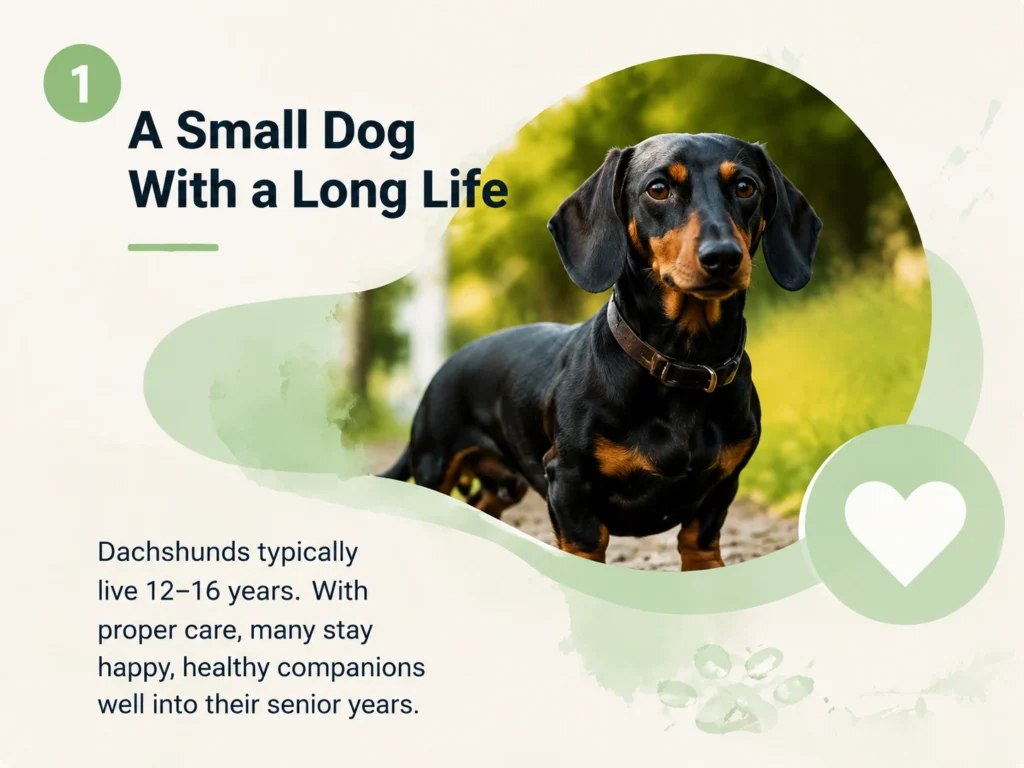
The average Dachshund lifespan is 12–16 years. Some Dachshunds may live beyond 16 years with excellent genetics, proper weight management, and consistent veterinary care.
| Dachshund Type | Average Lifespan |
| Miniature Dachshund | 12–16 years |
| Standard Dachshund | 12–15 years |
| Healthy Dachshunds | 16+ years possible |
Like people, every dog ages differently. Two Dachshunds born in the same year may have completely different health outcomes depending on genetics, lifestyle, and daily care.
Dachshund Life Stages: What Changes as They Age?
Understanding your Dachshund’s life stage can help you provide the right care at the right time.
| Age | Life Stage | Main Focus |
| 0–1 year | Puppy | Healthy growth, training, socialization (Learn more about puppy care in our guide on how long puppies sleep and feed) |
| 1–7 years | Adult | Weight control, exercise, prevention |
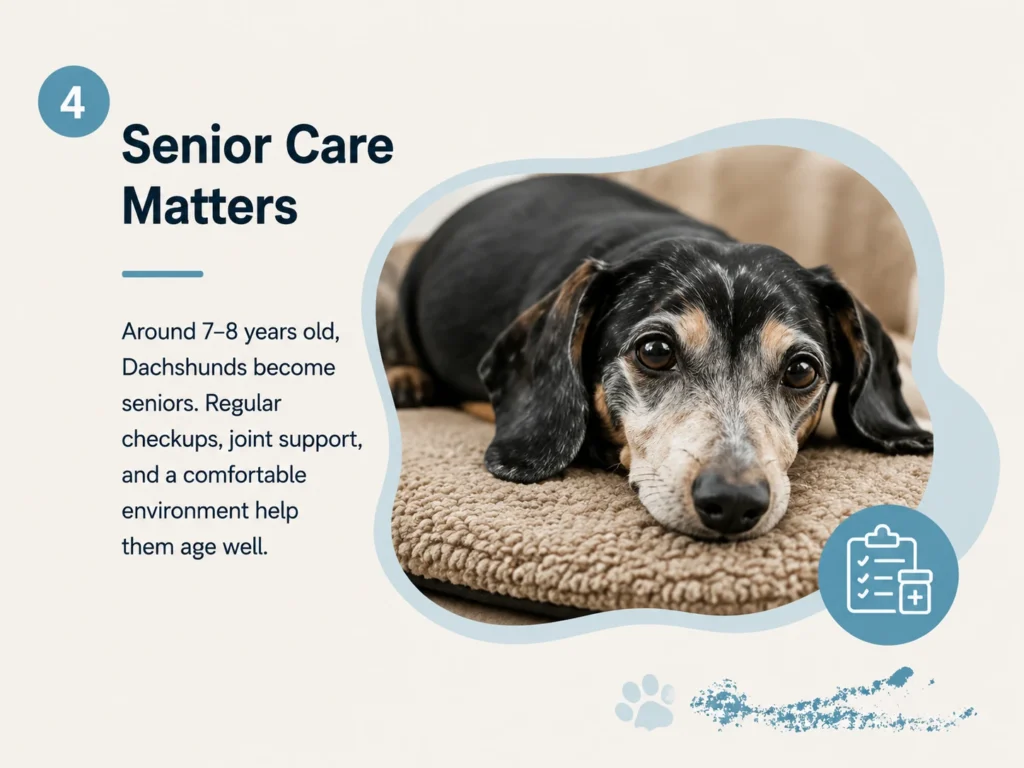
| 8+ years | Senior | Joint care, health monitoring, comfort |
Many Dachshunds remain playful well into their senior years. A 10-year-old Dachshund may still enjoy walks, sniffing adventures, and family activities when their health is properly managed.
What Affects a Dachshund’s Lifespan?
1. Genetics and Responsible Breeding
Genetics play a major role in how long a Dachshund lives. Some health conditions can have inherited components, including:
- IVDD
- Eye disorders
- Heart disease
- Joint problems
A responsible breeder focuses on health testing and avoiding breeding dogs with serious inherited conditions. However, genetics are only part of the story. Daily habits often determine whether a Dachshund’s later years are comfortable or limited.
2. Keeping a Healthy Weight

Weight management is one of the most important parts of Dachshund care. Dachshunds are famous for their love of food. Many owners accidentally give extra calories through:
- Too many treats
- Table scraps
- Large meal portions
For most dogs, a few extra pounds may not seem like a big problem. For a Dachshund, extra weight places additional stress on a long spine. Being overweight increases the risk of back problems, reduced mobility, joint stress, and lower quality of life.
Practical Tip: Body Condition Check
You should be able to:
- Feel your Dachshund’s ribs without pressing hard
- See a slight waist from above
- Notice a healthy abdominal tuck from the side
A lean Dachshund is not just healthier — they are protecting their back every day.
Common Health Problems in Dachshunds
1. Intervertebral Disc Disease (IVDD)
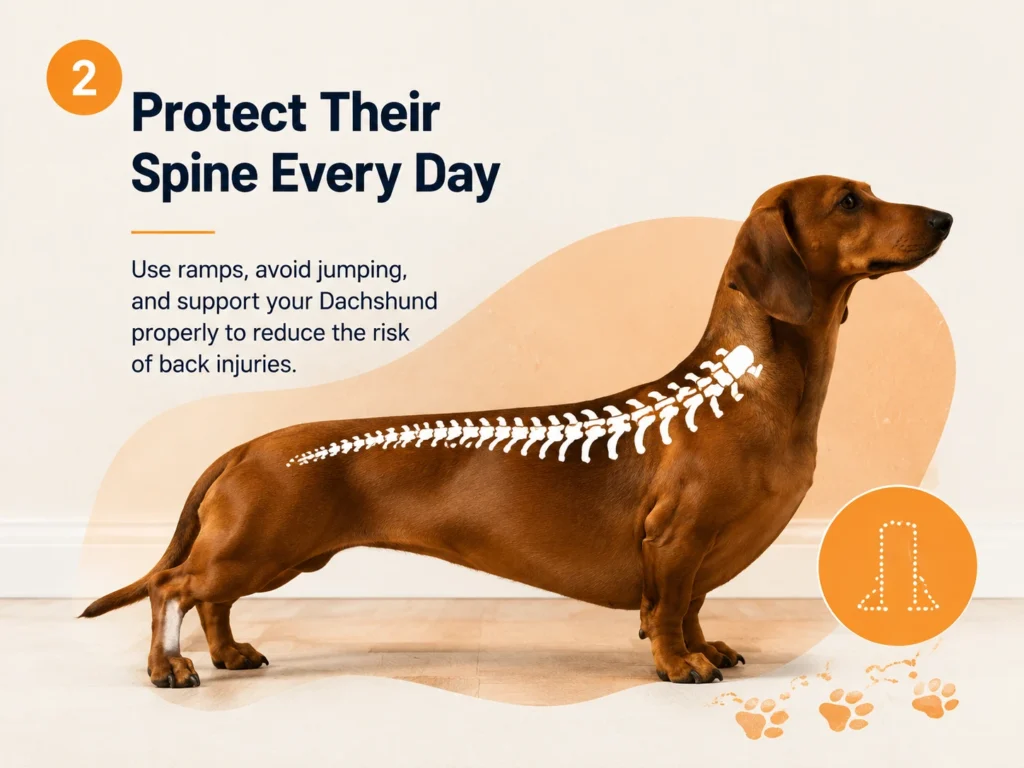
IVDD is the health issue most commonly associated with Dachshunds. Because of their long backs and short legs, Dachshunds experience extra pressure on their spinal discs. When these discs become damaged, they can irritate or compress the spinal cord.
Signs of IVDD may include:
- Reluctance to move
- Crying when picked up
- Hunched back
- Difficulty walking
- Weakness in the legs
- Dragging paws
How to Protect Your Dachshund’s Spine
Simple daily habits can reduce unnecessary stress:
- Use ramps instead of allowing repeated jumping
- Support both the chest and rear when lifting
- Keep your dog at a healthy weight
- Avoid slippery floors
Vet Insight: Spinal problems are easier to manage when detected early. According to veterinary literature onIntervertebral Disc Disease (IVDD) in Dogs – VCA Animal Hospitals, sudden changes in movement, pain, or weakness should always be taken seriously. For broader preventative tips, explore our dedicatedhealth care category.
2. Obesity
Obesity is one of the most preventable health risks for Dachshunds. Because they are small dogs, owners often underestimate how quickly extra calories add up. A few treats every day can become a significant part of their diet.
Helpful habits:
- Measure meals
- Choose healthy treats (Safe fruits and vegetables make great alternatives! Check out our guides on whether dogs can eat apples, cucumbers, or broccoli)
- Include daily movement
- Avoid frequent human food sharing
3. Dental Disease
Small breeds often have a higher risk of dental problems. Without regular care, plaque buildup can lead to gum disease, tooth loss, mouth pain, and infection.
The American Veterinary Medical Association (AVMA) Pet Dental Care Guidelines highlight that chronic dental problems can affect overall wellness.
Good dental habits include:
- Regular brushing
- Dental chews approved by your veterinarian
- Professional cleaning when recommended
4. Eye Problems
Some Dachshunds may develop eye-related conditions as they age.
- Cataracts
- Progressive retinal atrophy (PRA)
- Vision changes
Regular checkups help identify problems before they affect your dog’s daily life.
5. Heart Disease in Older Dachshunds
As Dachshunds enter their senior years, heart conditions become more common.
Watch for:
- Lower energy
- Coughing
- Difficulty exercising
- Breathing changes
Senior wellness exams can help detect problems earlier.
How to Help Your Dachshund Live Longer
1. Feed for Long-Term Health
A balanced diet supports a healthy weight, muscle maintenance, energy levels, and aging health.
The right food depends on your Dachshund’s age, activity level, body condition, and medical needs. More food does not mean more love. For many Dachshunds, maintaining the right weight is one of the greatest gifts an owner can provide.
2. Protect Their Long Back
Your daily routine matters.
- Add ramps near furniture
- Avoid repeated jumping
- Keep nails trimmed for better traction
- Use supportive bedding
Small adjustments can prevent years of unnecessary strain.
3. Keep Their Mind Active
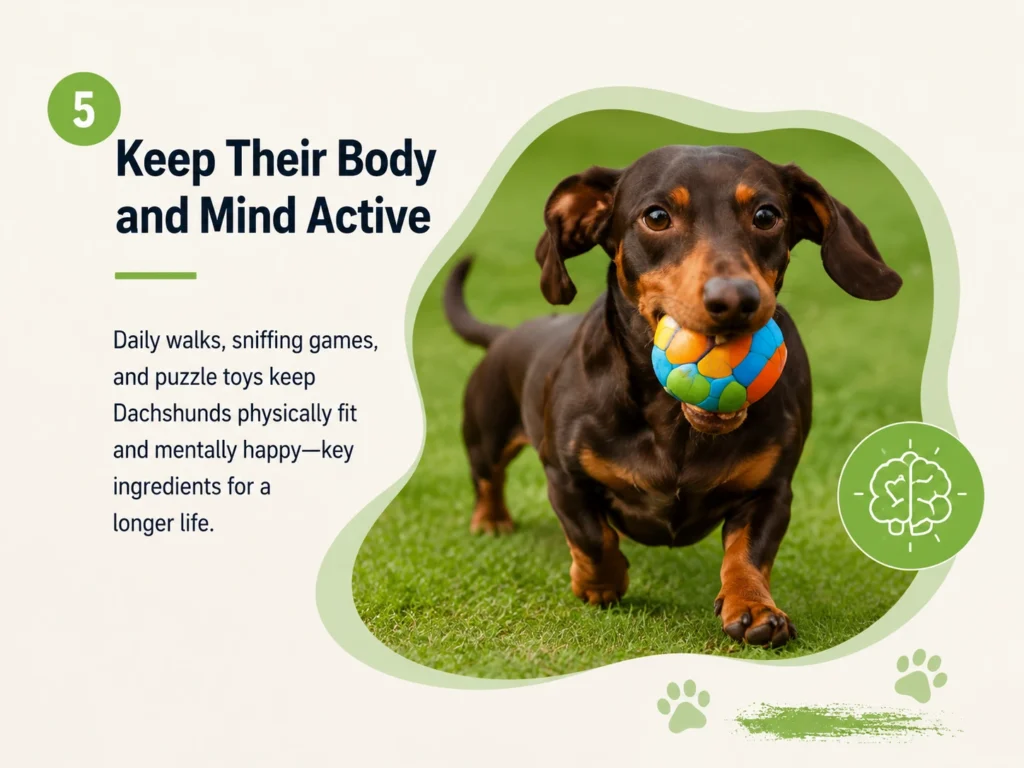
Dachshunds are intelligent problem-solvers. They were bred to hunt, which means they enjoy activities that challenge their instincts.
Try:
- Sniffing games
- Puzzle feeders
- Training sessions
- Interactive toys
Mental stimulation helps keep older Dachshunds engaged and confident.
4. Maintain Regular Veterinary Care
Preventive care is one of the best ways to support longevity.
- Adult Dachshunds: Annual wellness exams
- Senior Dachshunds: More frequent checkups when needed
Regular visits help monitor: Weight, teeth, heart, mobility, and early disease signs.
Dachshund Lifespan Compared to Other Breeds
| Breed | Average Lifespan |
| Dachshund | 12–16 years |
| Golden Retriever | 10–12 years |
| Labrador Retriever | 10–12 years |
| French Bulldog | 9–12 years |
| Chihuahua | 14–17 years |
Dachshunds often outlive many medium and large breeds, but their longevity depends heavily on preventing breed-specific problems. (To compare owning costs across different breeds, feel free to check out our breakdown of Beagle prices and raising costs).
Frequently Asked Questions
How long do miniature Dachshunds live?
Miniature Dachshunds usually live around 12–16 years, although some healthy individuals live longer.
Can a Dachshund live 20 years?
A 20-year-old Dachshund is extremely rare. Exceptional genetics and excellent care may contribute to a very long life, but it is not typical.
What is the most common health problem in Dachshunds?
The most recognized health concern is IVDD, which affects the spine and can range from mild discomfort to serious mobility problems.
Are Dachshunds healthy dogs?
Yes. Dachshunds are generally healthy and long-lived dogs. Their biggest challenges are usually related to weight management and spinal health.
Final Thoughts: Helping Your Dachshund Enjoy More Good Years
Dachshunds may have short legs, but they often have big personalities and long lives. Most Dachshunds can expect to live 12–16 years, and the choices you make every day can influence how comfortable those years are.
The most important things you can do are simple:
- Keep them lean
- Protect their spine
- Provide daily activity
- Maintain dental care
- Schedule regular checkups
At Dogsoria, we believe better information helps dogs live healthier, happier lives. If you ever have questions or want to reach out, feel free to visit our contact page.
Because every extra year with your Dachshund is not just more time — it is more walks, more memories, and more moments together.