
Fast Answer
Yes, dogs can eat small amounts of fresh peach flesh. Remove the pit, stem, and leaves first, then wash the fruit and cut it into bite-sized pieces.
Never let your dog chew or swallow a peach pit. It can cause choking or intestinal blockage, and the kernel inside contains cyanogenic compounds that may release cyanide when crushed.
Summary
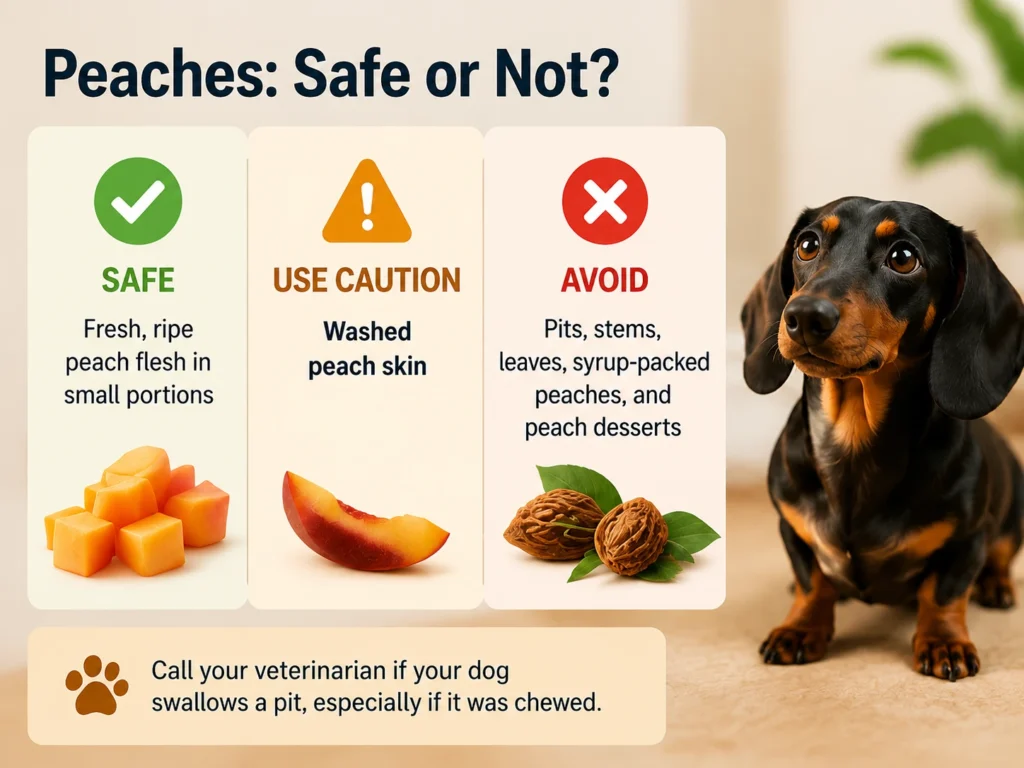
- Safe: Fresh, ripe peach flesh in small portions
- Use caution: Washed peach skin
- Avoid: Pits, stems, leaves, syrup-packed peaches, and peach desserts
- Call your veterinarian: If your dog swallows a pit, especially if it was chewed
Are Peaches Safe for Dogs?
The ripe flesh of a peach is not considered toxic to dogs. It contains water, fiber, and small amounts of vitamins, making it an occasional alternative to higher-calorie treats.
Still, peaches should remain a treat—not a meaningful source of nutrition. Dogs should receive their essential nutrients from a complete and balanced diet. Treats and extras should generally account for no more than 10% of a dog’s daily calories.
Fresh peach is the best option. Wash it, remove the entire pit, and serve only a few small pieces.
| Peach product | Is it safe? | What to know |
|---|---|---|
| Fresh peach flesh | Yes, in moderation | Wash and remove the pit |
| Peach skin | Usually | May upset sensitive stomachs |
| Peach pit | No | Choking, obstruction, and toxicity risk |
| Canned peaches in syrup | Avoid | High in added sugar |
| Unsweetened frozen peaches | Usually | Check the ingredient label |
| Peach pie or cobbler | No | Often high in sugar and fat |
| Peach yogurt or ice cream | Avoid | May contain excess sugar, fat, or sweeteners |
Are Peaches Good for Dogs?
A few pieces of peach can provide hydration and variety. Peaches contain fiber and are approximately 89% water, which makes them refreshing during warm weather.
However, claims that peaches improve a dog’s eyesight, protect its joints, or strengthen its immune system are easy to overstate. The amount served as a treat is unlikely to produce a major health effect.
Think of peach as a pleasant snack rather than a supplement.
Dogs with diabetes, obesity, pancreatitis, recurring digestive problems, or a prescription diet may not be good candidates for fruit treats. Ask your veterinarian before introducing peaches if your dog has one of these conditions.
Why Are Peach Pits Dangerous?
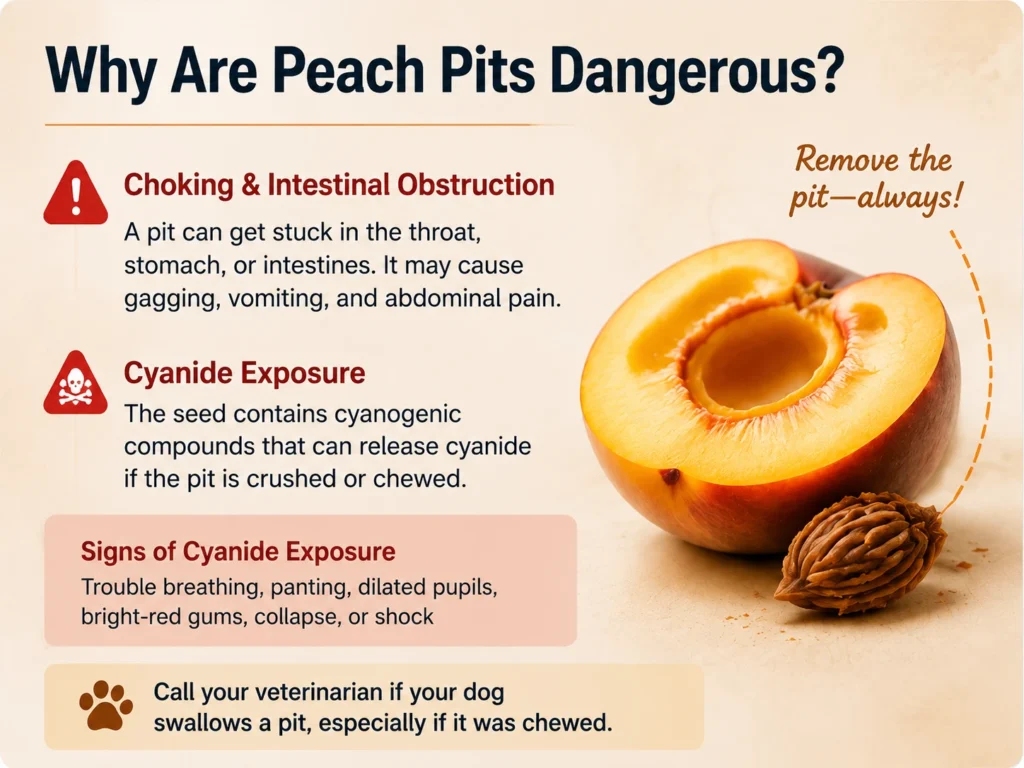
The pit presents two separate risks.
Choking and intestinal obstruction
A whole peach pit can become lodged in the throat, stomach, or intestines. Hard fruit pits may also damage teeth or injure the esophagus. VCA Animal Hospitals lists gagging, drooling, vomiting, difficulty passing stool, and abdominal pain among the possible warning signs after a dog swallows a fruit pit.
The level of risk depends partly on the dog’s size, the pit’s size, and whether it was swallowed whole or broken into pieces. A pit that seems small enough to swallow can still become stuck farther along the digestive tract.
Cyanide exposure
The seed inside a peach pit contains cyanogenic glycosides. When the pit is crushed or thoroughly chewed, these compounds can release cyanide.
According to the ASPCA, peach stems, leaves, and seeds contain cyanide-producing compounds. Possible signs of serious exposure include difficulty breathing, panting, dilated pupils, unusually bright-red gums, collapse, or shock.
An intact swallowed pit may present a greater obstruction risk than poisoning risk, but this is not something to assess at home. Contact a veterinarian promptly for case-specific advice.
Can Dogs Eat Peach Skin?
Peach skin is not toxic to dogs, and most healthy dogs can tolerate a small amount. Wash the fruit thoroughly before serving it.
Peeling is optional, but it may help if your dog has a sensitive stomach or struggles with fibrous foods. The skin should not be treated as inherently dangerous simply because pesticide residue is possible; careful washing is a reasonable first step.
Stop offering peach if your dog develops vomiting, loose stool, gas, or abdominal discomfort.
How to Prepare Peach for Your Dog
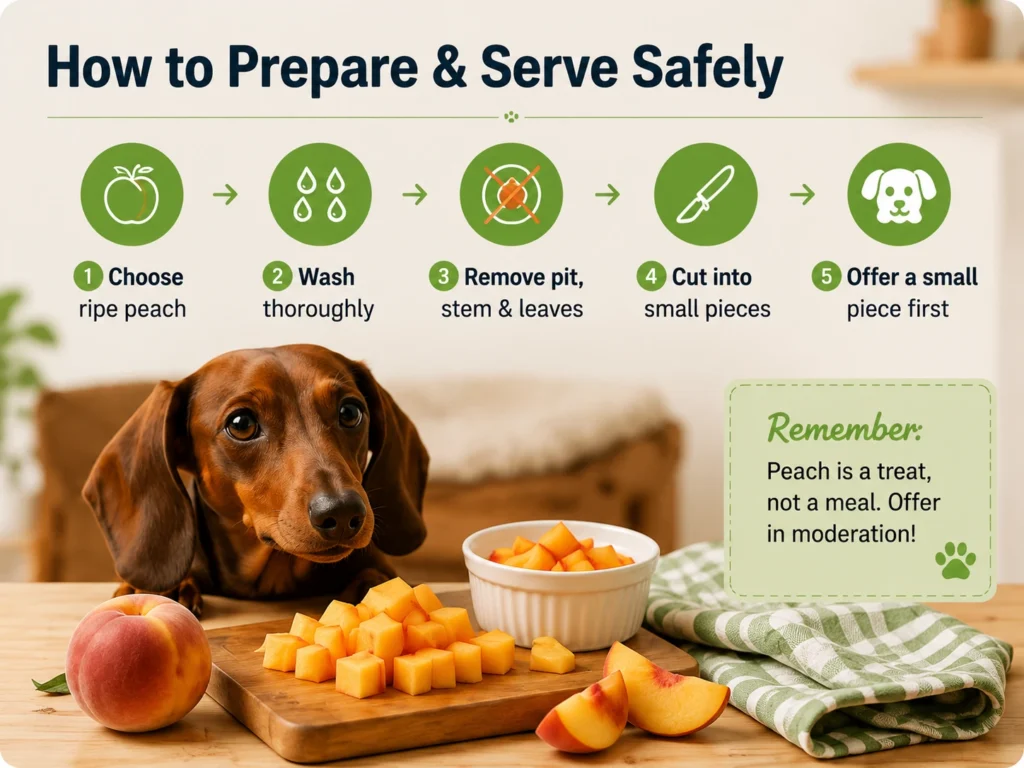
Use this checklist before sharing peach:
- Choose a fresh, ripe peach without mold.
- Wash it thoroughly under running water.
- Remove the stem, leaves, and entire pit.
- Peel it if your dog has sensitive digestion.
- Cut the flesh into pieces appropriate for your dog’s size.
- Offer one small piece the first time.
- Keep discarded pits in a secure trash container.
Fresh or thawed unsweetened peach pieces can also be mashed into a food puzzle or frozen into small portions. Always check packaged frozen fruit for added sugar or sweeteners.
How Much Peach Can a Dog Eat?
There is no universal serving size because dogs have different calorie needs and health histories. Start conservatively.
| Dog size | Suggested first serving |
|---|---|
| Small dog | 1 small piece |
| Medium dog | 1–2 small pieces |
| Large dog | 2–3 small pieces |
These are starting amounts, not daily recommendations. Peach should be offered occasionally and counted as part of the dog’s total treat allowance.
Too much fruit may cause diarrhea, gas, vomiting, or loss of appetite because of its sugar and fiber content. If symptoms are severe, persistent, or accompanied by pain or lethargy, contact your veterinarian.
What Should You Do If Your Dog Eats a Peach Pit?
Do not wait for obvious symptoms before seeking advice.
- Remove any remaining peach pieces from your dog’s reach.
- Check whether the pit was swallowed whole or chewed, if you can do so safely.
- Note when it happened and approximately how much was eaten.
- Contact your veterinarian, an emergency veterinary hospital, or an animal poison-control service.
- Do not induce vomiting unless a veterinary professional specifically instructs you to do so.
Seek urgent veterinary care if your dog is choking, repeatedly vomiting, struggling to breathe, collapsing, showing abdominal pain, or unable to pass stool.
Frequently Asked Questions
Can puppies eat peaches?
Yes, but only a tiny piece of properly prepared peach flesh. Puppies can have sensitive digestive systems, so introduce one new food at a time.
Can dogs eat canned peaches?
It is better to avoid peaches packed in syrup because they contain unnecessary added sugar. A small piece of fruit packed in water with no added sugar or sweetener is less concerning, but fresh peach remains the simpler choice.
Can dogs eat frozen peaches?
Yes, provided they are pit-free and contain no added sugar or sweeteners. Cut large frozen pieces smaller to reduce the choking risk.
Can dogs eat white peaches or nectarines?
The same basic rules apply. Serve only washed, ripe flesh and remove the pit completely.
Are peach leaves toxic to dogs?
Yes. Keep dogs away from peach tree leaves, stems, and fallen or damaged fruit. The ASPCA identifies these parts as sources of cyanogenic compounds.
The Bottom Line
Dogs can eat a few pieces of fresh peach flesh as an occasional treat. Wash the fruit, remove the entire pit, and begin with a small portion.
The pit is the real concern. It can cause choking or intestinal obstruction, while a crushed kernel may expose a dog to cyanogenic compounds. If your dog swallows or chews a peach pit, contact a veterinarian rather than waiting for symptoms.
References
- ASPCA: Peach—Toxic and Non-Toxic Plants
- Merck Veterinary Manual: Cyanide Poisoning in Animals
- VCA Animal Hospitals: Summer Fun and Follies
- Pet Poison Helpline: Peach Pits
Medical Disclaimer
This article provides general educational information and does not replace veterinary diagnosis or treatment. Contact a veterinarian or animal poison-control service if your dog has swallowed a peach pit or is showing concerning symptoms.