
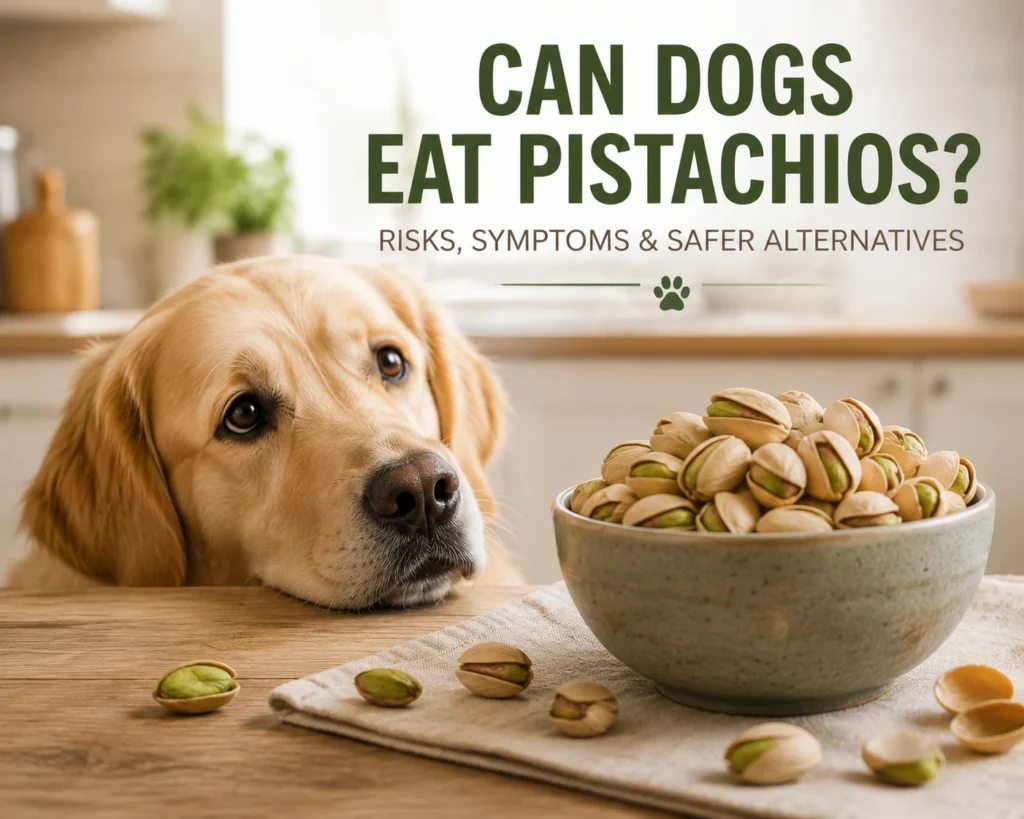
Can dogs eat pistachios? No — dogs should not eat pistachios regularly.
While pistachios are not classified as highly toxic, they can still cause serious health issues in dogs, especially when salted, eaten in large amounts, or consumed with shells.
Vet Insight: In emergency cases, vets often don’t worry about the “nut” itself first — they worry about: fat load + dehydration + whether the dog also ate the shell. That combination matters more than people expect.
The main risks include:
- Pancreatitis (high fat content)
- Salt poisoning (if seasoned)
- Choking or intestinal blockage (shells)
- Possible mold contamination
Even a small amount can upset a sensitive dog’s stomach.
Are Pistachios Safe for Dogs?
According to the American Kennel Club (AKC), many human snacks are technically “non-toxic” but still not appropriate for dogs due to how their digestive systems process fat and salt. That distinction is important here. Pistachios fall into the “not poisonous, but not safe” category.
I’ve personally noticed something over the years working around pet owners — nuts are one of those foods people assume are harmless simply because dogs like the taste. But digestion doesn’t work that way.
One thing that surprises most dog owners…
It’s not the pistachio itself that causes the most emergencies. It’s what comes with it:
- salted coatings
- flavored seasonings
- shells left on the floor
- dogs eating “just a few”… repeatedly
Those small details are usually what lead to vet visits.
Why Pistachios Can Be Risky for Dogs
1. High Fat -> Pancreatitis Risk
Veterinarians at VCA Animal Hospitals explain that high-fat foods are a common trigger for pancreatitis in dogs, a painful and sometimes serious condition that often requires medical treatment.
Symptoms can include:
- vomiting
- hunched posture
- loss of appetite
- abdominal pain
What makes pistachios tricky is that dogs don’t need to eat a lot for fat intake to spike quickly.
Trainer’s Tip: If a food leaves an oily residue on your fingers, it’s usually not a good idea for dogs — even in small amounts.
2. Salted Pistachios -> Hidden Risk
PetMD notes that excessive sodium intake in dogs can lead to dehydration and sodium ion poisoning in more severe cases.
Symptoms can include:
- excessive thirst
- vomiting
- tremors
- in severe cases, neurological signs
Most people don’t realize this happens gradually — not instantly. Just like when evaluating other human foods—for instance, asking can dogs eat tomatoes or processed snacks—added seasonings and sodium levels are often the hidden culprits behind pet emergencies.
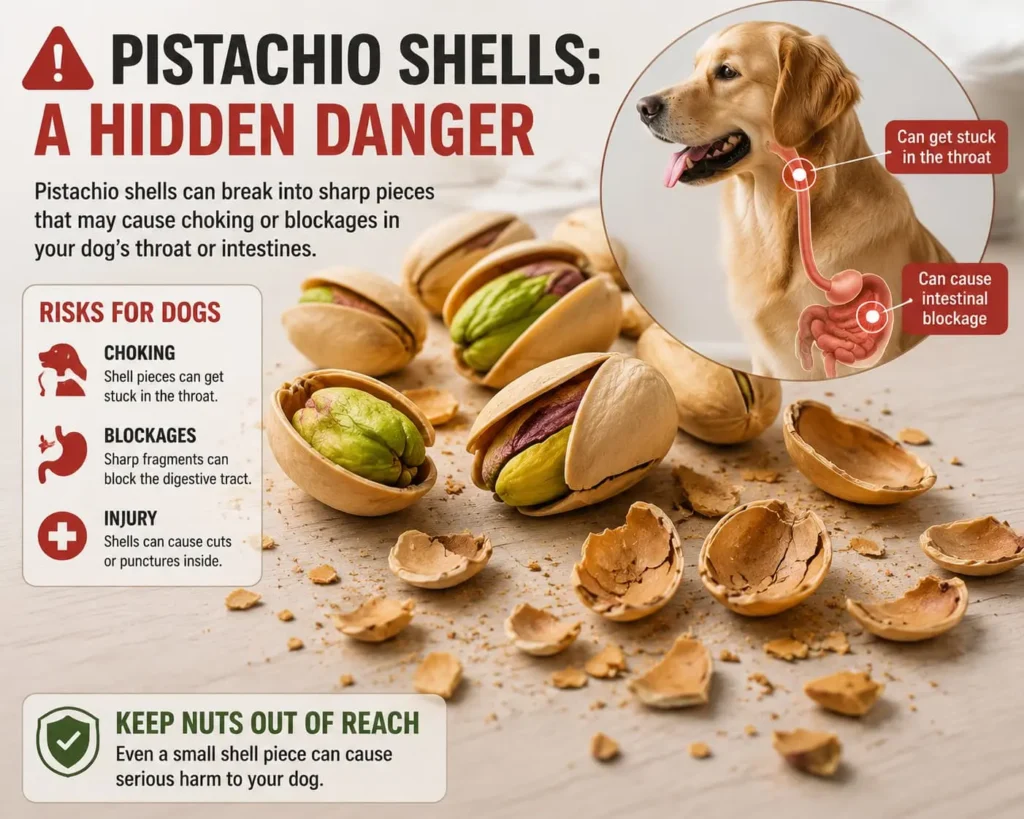
3. Shells -> The Real Physical Danger
Cornell University College of Veterinary Medicine highlights that foreign body ingestion is one of the most common causes of emergency surgery in dogs. Pistachio shells are especially problematic because they:
- break into sharp fragments
- don’t digest
- can cause obstruction
Real-Life Scenario (From Pet Owner Reports)
A dog owner once shared that their Labrador quietly ate pistachio shells during a family movie night. At first, everything seemed fine. Two days later:
- vomiting started
- appetite dropped
- emergency surgery was required due to blockage
This is why vets often say: “It’s not what they eat — it’s what happens next.”
What If My Dog Just Ate Pistachios?
If this happens, don’t panic — but act quickly:
- Step 1: Estimate amount
- 1–2 nuts -> usually low risk (large dog)
- handful -> monitor closely
- shells -> higher risk
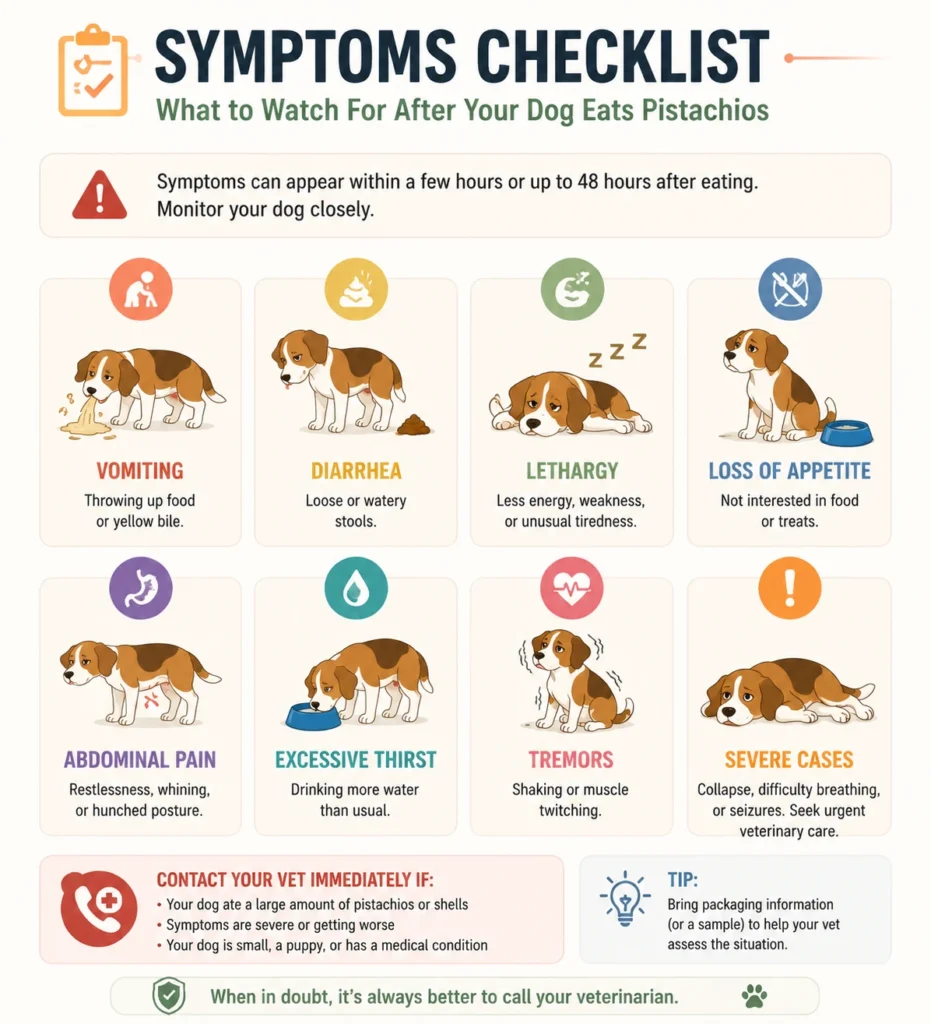
- vomiting
- Step 2: Watch for symptoms (24–48 hours)
- diarrhea
- lethargy
- abdominal discomfort
- Step 3: Call vet if:
- your dog is small
- shells were eaten
- symptoms appear
Can Dogs Ever Eat Pistachios?
- Technically: A single plain, unsalted pistachio is unlikely to harm a large healthy dog.
- But in practice: It’s not a recommended treat, the risk outweighs the benefit, and safer alternatives exist. Much like how can dogs eat avocado comes with its own set of unique dietary warnings regarding fat and pits, nuts require the same level of strict caution.
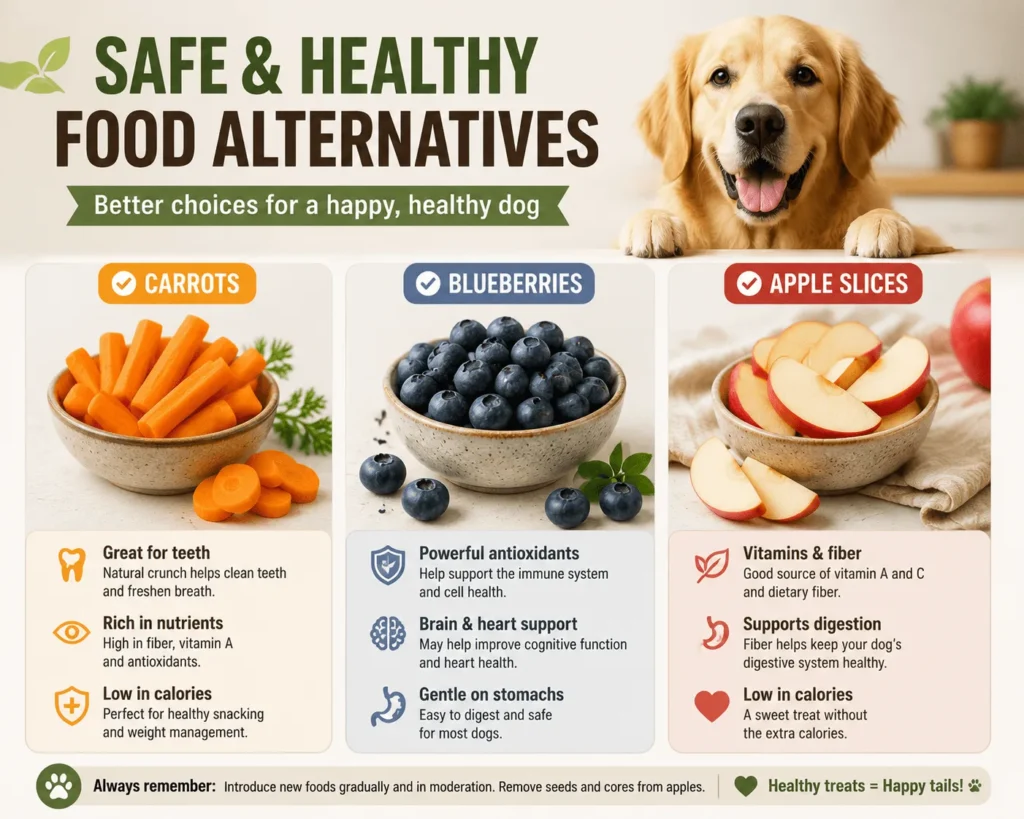
Safer Snack Options
If you want to share food with your dog:
- carrots (great crunch)
- blueberries (antioxidants)
- apple slices (no seeds)
- plain pumpkin puree
These are far more predictable for digestion.
Trainer’s Perspective
One pattern I’ve noticed is that most snack-related dog issues don’t come from “bad owners” — they come from normal situations like:
- guests leaving food out
- dogs scavenging during parties
- people thinking “just one won’t matter”
But with high-fat foods like nuts, small amounts can matter more than people expect.
Frequently Asked Questions
Can dogs eat pistachios?
Not recommended. Small amounts are not toxic, but not safe as a regular treat.
Are pistachios toxic to dogs?
No, but they can still cause digestive and metabolic issues.
What happens if a dog eats pistachios?
Possible vomiting, diarrhea, pancreatitis, or blockage depending on amount.
Can puppies eat pistachios?
No. Puppies are more sensitive to fat and choking hazards.
Are salted pistachios worse?
Yes, due to sodium content.
Are pistachio shells dangerous?
Yes — high risk of blockage or injury.
How many pistachios are dangerous?
There is no safe threshold; risk depends on dog size and condition.
Should I induce vomiting?
Only if instructed by a veterinarian.
Medical Review Note
This article is informed by publicly available veterinary guidance from:
- American Kennel Club (AKC)
American Kennel Club - PetMD Veterinary Resources
PetMD - VCA Animal Hospitals
VCA Animal Hospitals - Cornell University College of Veterinary Medicine
Cornell University College of Veterinary Medicine
Final Takeaway
Pistachios aren’t poisonous to dogs — but they’re not worth the risk. Between fat content, salt, and shells, there are simply too many ways something small can turn into a vet visit.