
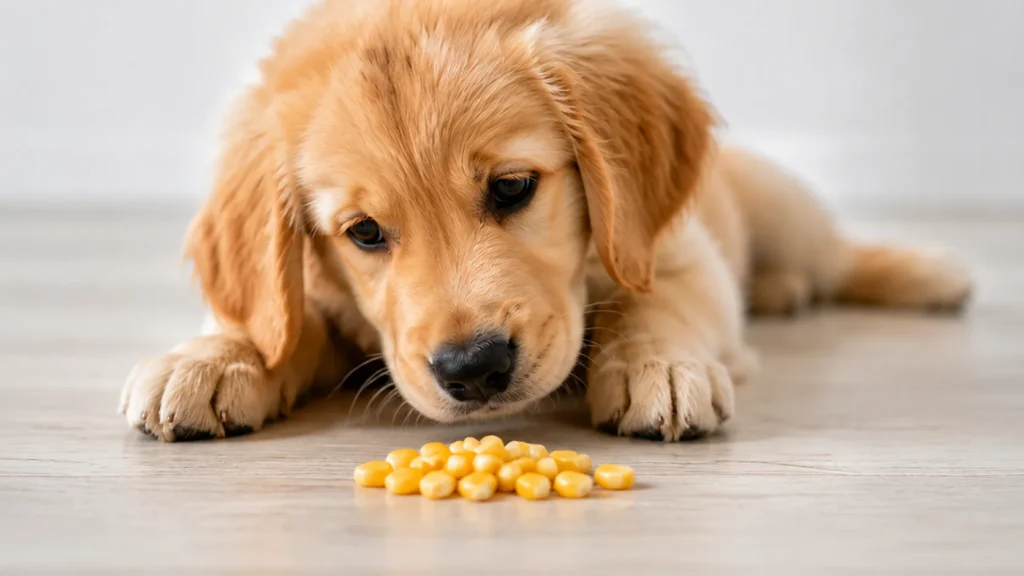
Yes, puppies can eat corn, but only in small amounts and only when it is plain, cooked, and removed from the cob.
The corn kernels themselves are usually not the biggest danger. The real risk is the corn cob. Corn cobs cannot be digested by dogs and may cause choking, stomach blockage, or intestinal obstruction, especially in young puppies with narrow digestive tracts.
If your puppy ate a few plain cooked corn kernels, they will probably be fine. If your puppy chewed or swallowed any part of a corn cob, call your veterinarian immediately.
Why This Guide Is Different: Puppy vs. Adult Dog
Most articles online say, “dogs can eat corn.” That is technically true.
But a growing 3-month-old puppy is not the same as a 70-pound adult dog. Puppies have smaller bodies, narrower intestines, more sensitive stomachs, and nutritional needs that depend heavily on a balanced puppy diet. A food that is harmless in tiny amounts can still cause diarrhea, vomiting, or nutritional imbalance if it becomes a habit.
So this guide focuses specifically on puppies, not just adult dogs.
Is Corn Safe for Puppies?
Plain cooked corn kernels are generally safe for healthy puppies when fed occasionally and in moderation.
Corn is not toxic to dogs. In fact, corn is used in many commercial dog foods because it provides carbohydrates, fiber, fatty acids, vitamins, and antioxidants. The problem is not usually the corn itself. The problem is how it is prepared, how much is fed, and whether the cob is involved.
Safe corn for puppies should be:
-
- Cooked
-
- Plain
-
- Soft
-
- Removed from the cob
-
- Given in very small amounts
Unsafe corn includes:
-
- Corn on the cob
-
- Buttered corn
-
- Salted corn
-
- BBQ corn
-
- Canned corn with added sodium
-
- Corn chips
-
- Doritos
-
- Popcorn with butter or seasoning
Case Study: Winston the Frenchie vs. A $4,520 Corn Cob
To understand how dangerous this is in real life, let’s look at a well-documented veterinary emergency case involving Winston, a 5-month-old French Bulldog.
Late one Tuesday night, Winston’s owner had to rush him to an emergency pet hospital. The puppy had been violently vomiting clear foam for 6 hours and refused all food. When the emergency vet asked if Winston had access to any food scraps, the owner recalled they had a family BBQ two days prior.
At the clinic, standard X-rays were taken, but nothing showed up. This is because corn cobs are radiolucent (they have the same density as normal soft tissue and remain invisible on standard X-ray film). It wasn’t until vets performed an emergency ultrasound that they found a 1.5-inch jagged piece of corn cob wedged tightly in his jejunum (mid-small intestine).
Due to the obstruction, the lack of blood flow was already causing the intestinal wall to turn black and tissue death to set in.
The Cost of a Single Bite: Winston required an emergency laparotomy (abdominal surgery) and spent 3 days in the veterinary ICU. The final bill came to $4,520—a stark reality that aligns with Nationwide Pet Insurance data on foreign body claims. Winston survived, but only because his owner took the early vomiting signs seriously and didn’t wait until morning.
Health Benefits of Corn for Dogs
Corn can offer some nutritional value. It contains carbohydrates for energy, dietary fiber for digestion, and linoleic acid, an essential fatty acid that helps support skin and coat health. Yellow corn also contains antioxidants such as lutein and zeaxanthin.
That said, your puppy does not need extra corn to be healthy. A complete and balanced puppy food should already provide all the nutrients your puppy needs. Corn should be treated as an occasional snack, not a regular part of the diet.
Special Considerations for Growing Puppies
Puppies have developing digestive systems. Between 2 and 6 months of age, many puppies are more prone to soft stool, vomiting, gas, and stomach upset when new foods are introduced too quickly. Even if corn is not toxic, too much fiber and starch can overwhelm a young digestive tract.
One possible issue is osmotic diarrhea
This happens when excess undigested carbohydrates or fiber draw water into the intestines, leading to loose stool. In an adult dog, mild diarrhea may simply be inconvenient. In a tiny puppy, repeated diarrhea can lead to dehydration much faster.
Start small: One or two kernels are enough for a first test.
The Calcium-to-Phosphorus Ratio Concern
Puppies, especially large-breed puppies, need carefully balanced nutrition for bone development. Corn is mainly a carbohydrate source. It is not a balanced puppy food and should not replace meals. If a puppy eats too many table scraps, including corn, rice, bread, or other extras, those foods may dilute the nutrients in their proper puppy diet.
This matters most for large and fast-growing breeds such as:
-
- Golden Retrievers
-
- German Shepherds
-
- Labrador Retrievers
-
- Rottweilers
A few kernels will not cause bone problems. A daily habit of replacing puppy food with human food can.
How Much Corn Can Puppies Eat?
Think of corn as a treat, not a meal. Treats and extras should stay below about 10% of your puppy’s daily calorie intake. The other 90% should come from complete and balanced puppy food.
Here is a simple feeding guide (assuming the corn is plain, cooked, and removed from the cob):
| Puppy Size | Safe Serving Amount |
|---|---|
| Under 5 lbs | 1-2 kernels |
| 5-15 lbs | 3-5 kernels |
| 15-30 lbs | 5-10 kernels |
| Over 30 lbs | 10-15 kernels |
For first-time feeding, use even less. Give 1-2 kernels and monitor your puppy for 24 hours. Watch for vomiting, diarrhea, itching, paw licking, ear scratching, or sudden soft stool.
What Kinds of Corn Can Puppies Eat?
Not all corn products are equal. Some are safe in tiny amounts, while others should stay far away from your puppy’s bowl.
Plain Cooked Sweet Corn Kernels
This is the safest form of corn for puppies. The corn should be boiled or steamed, then removed from the cob before serving. Do not add butter, salt, garlic, onion, cheese, pepper, or BBQ seasoning. Plain cooked kernels can be offered as an occasional reward, but keep the portion very small.
Raw Corn Kernels
Raw corn is not toxic, but it is harder to digest. The outer shell of each kernel contains cellulose, a tough fiber that dogs do not break down well. This is why many owners see whole corn kernels in their puppy’s poop after feeding corn. Cooked corn is softer and easier to chew; for puppies, cooked is always better than raw.
Canned Corn
Canned corn is not the best choice for puppies. Many canned corn products contain added sodium, preservatives, or flavoring. Extra sodium is unnecessary for puppies and may contribute to increased thirst, digestive upset, or electrolyte problems if eaten in large amounts. If your puppy accidentally eats a few pieces of canned corn, it is unlikely to be a major emergency, but it should not be a regular treat.
Popcorn
Plain air-popped popcorn can be safe in very small amounts. But most popcorn people eat is not puppy-safe.
Avoid popcorn with:
-
- Butter
-
- Salt
-
- Caramel
-
- Cheese powder
-
- Spices
-
- Artificial flavoring
The bigger hidden danger is unpopped kernels: Unpopped popcorn kernels are hard, sharp, and easy to miss. They can get stuck between puppy teeth, irritate the gums, crack teeth, or scratch the throat if swallowed. If you give popcorn, inspect every piece carefully.
Corn Chips and Doritos
Corn chips, tortilla chips, Doritos, and similar snacks are not appropriate for puppies. They often contain high levels of salt, fat, artificial colors, garlic powder, onion powder, and complex seasonings. These snacks offer no real benefit to puppies and can irritate the stomach, increase thirst, and add unnecessary calories. Keep them off the puppy menu.
Can Puppies Eat Corn on the Cob?
No. Puppies should never eat corn on the cob. This is the most important safety rule in the entire article.
Corn cobs are dangerous because they are not digestible. A puppy may chew off a piece, swallow it, and seem normal at first. But the cob can later become trapped in the stomach or intestines, causing a life-threatening intestinal blockage.
Why Corn Cobs Are So Dangerous
A corn cob is tough, fibrous, and bulky. A dog’s stomach acid cannot break it down like normal food. Once swallowed, the cob may move into the intestines and get stuck. This can block food, water, and waste from passing normally.
A gastrointestinal obstruction can lead to:
-
- Repeated vomiting
-
- Severe abdominal pain
-
- Dehydration
-
- Loss of appetite
-
- Weakness
-
- Tissue damage
-
- Intestinal rupture in severe cases
Veterinary hospitals often treat foreign-body obstructions as urgent cases because the longer an obstruction stays in place, the greater the risk of complications.
Why Puppies Are at Higher Risk
Puppies are smaller than adult dogs. A small-breed puppy may have a very narrow digestive tract. A piece of cob that looks “small” to a human can be large enough to block a puppy’s intestines.
High-risk puppies include:
-
- Chihuahuas
-
- Pomeranians
-
- Yorkshire Terriers
-
- Toy Poodles
-
- French Bulldogs
-
- Maltese
-
- Small mixed breeds
Large-breed puppies are not safe either. A Labrador puppy or Golden Retriever puppy may swallow a larger piece before anyone can stop them.
BBQ Corn and Leftovers Are Even Worse
Corn on the cob becomes even more dangerous after a barbecue because it may be covered in:
-
- Butter
-
- Salt
-
- Garlic powder
-
- Onion powder
-
- Spicy rubs
-
- Cheese seasoning
-
- Grease
Garlic and onion ingredients can damage red blood cells in dogs and may lead to serious illness depending on the amount eaten. High-fat butter and greasy leftovers can also trigger pancreatitis, a painful inflammatory condition that may cause vomiting, abdominal pain, lethargy, and dehydration.
The classic danger zone is the trash can: A puppy may steal leftover corn cobs after a family meal, especially if they smell like butter, meat juices, or seasoning. Always throw corn cobs into a secure trash can with a lid.
Aflatoxin Risk in Poorly Stored Corn
Another rare but serious concern is aflatoxin. Aflatoxins are toxins produced by certain molds that can grow on corn and other crops when they are stored improperly. Dogs are highly sensitive to aflatoxin exposure, and severe cases can damage the liver.
This is not usually a concern with fresh, properly cooked sweet corn from your kitchen. But moldy, old, or poorly stored corn should never be fed to puppies. If corn looks moldy, smells strange, or has been sitting outside or in the trash, do not let your puppy near it.
Clinical Signs After Eating a Corn Cob
Symptoms may not appear immediately. Some puppies seem normal for several hours after eating a corn cob. That does not mean they are safe.
Watch closely for:
-
- Repeated vomiting
-
- Dry heaving
-
- Drooling
-
- Refusing food
-
- Lethargy
-
- Diarrhea
-
- Straining to poop
-
- No bowel movement
-
- Bloated belly
-
- Abdominal pain
-
- Hunched posture
-
- Restlessness
-
- Whining when picked up
A hunched back, tucked abdomen, or “prayer position” can be a sign of severe abdominal pain. If your puppy ate or may have eaten a corn cob, do not wait for symptoms before calling a vet.
Clinical Reality: The “1-Inch” Danger Zone
There is no perfectly safe corn cob size. Even a small piece can be dangerous, especially for a puppy. A one-inch cob fragment may sound tiny to an adult human, but inside a small puppy’s digestive tract, it can be a serious foreign body.
Emergency Surgery Costs
Foreign-body obstruction treatment can become expensive quickly. Depending on location, hospital type, imaging, surgery, hospitalization, and complications, emergency intestinal obstruction treatment may cost thousands of dollars.
In many U.S. emergency settings, surgery and hospitalization can fall in the $3,000 to $7,000+ range. The exact cost varies, but the principle is simple:
-
- Earlier care usually gives your puppy more options.
-
- Waiting often makes treatment more invasive and more expensive.
Corn Cobs May Not Show Clearly on X-Rays
Many owners assume a vet can take an X-ray and immediately see the cob. Not always. Corn cobs may not be clearly visible on standard X-rays. Instead, veterinarians may look for signs of obstruction, gas patterns, stomach enlargement, or abnormal intestinal changes. In some cases, ultrasound, contrast imaging, endoscopy, or exploratory surgery may be needed. This is one reason “wait and see” can be highly risky.
The First 2 Hours Matter
If your puppy swallowed a corn cob very recently, your veterinarian may have more options. Depending on the size, timing, and condition of your puppy, a vet may consider safe vomiting induction or endoscopic removal.
But once the cob moves deeper into the intestines, surgery may be the only option. Do not try to manage this alone at home. Call your veterinarian or an emergency veterinary clinic immediately.
How to Safely Feed Corn to Your Puppy
If you want to feed corn, follow these steps carefully:
Step 1: Cook It Thoroughly
Boil or steam the corn until soft. Do not add salt, butter, garlic, onion, cream, cheese, BBQ sauce, or spices. Plain is best.
Step 2: Remove the Kernels From the Cob
Never give your puppy the cob. Cut or scrape the kernels off first. Then immediately throw the cob into a secure trash can. Do not leave it on a plate, table, counter, grill tray, or open garbage bag.
Step 3: Mash the Kernels
Do not be shocked if you see whole corn kernels in your puppy’s poop. Dogs do not digest the tough cellulose shell of corn kernels very well. Their digestive systems may pass the outer shell with little change. To help your puppy access more of the nutrients, lightly mash cooked kernels before serving. This is especially useful for small puppies.
Step 4: Follow the 10% Treat Rule
Corn should be part of the treat category. It should not replace puppy food. As a simple rule, give no more than 5-10 kernels per serving for most puppies, and much less for toy breeds. When in doubt, give less.
What To Do If Your Puppy Ate a Corn Cob
If your puppy ate a corn cob, act quickly.
-
- Step 1: Remove Access. Take away any remaining corn, cobs, plates, foil, skewers, or trash. Check the floor, yard, kitchen, grill area, and garbage can.
-
- Step 2: Estimate What Was Eaten. Try to determine how much cob is missing, whether it was chewed or swallowed whole, when it happened, whether seasonings were involved, and your puppy’s weight and age. Take a photo of the remaining cob if helpful.
-
- Step 3: Call Your Veterinarian Immediately. Do not wait for vomiting. Do not wait for diarrhea. Do not wait to see if your puppy “acts normal.” Call your regular veterinarian or an emergency clinic and explain what happened.
Do Not Use Hydrogen Peroxide Unless a Vet Tells You To
Do not blindly induce vomiting at home with hydrogen peroxide. This can be dangerous. A rough or sharp cob fragment may injure the esophagus on the way back up. Hydrogen peroxide can also severely irritate the stomach and may be unsafe in some situations. Only induce vomiting if a veterinarian specifically instructs you to do it.
Triage Checklist
-
- Tiny puppies under 5 pounds: Treat any swallowed cob piece as an emergency. Go to the vet immediately.
-
- Small and medium puppies: Call your vet immediately. Observation without veterinary guidance is risky.
-
- Large-breed puppies: Still call your vet. A tiny fragment may pass in some cases, but there is no reliable way to know at home.
-
- Any puppy with symptoms: Go to an emergency vet immediately if you see repeated vomiting, lethargy, abdominal pain, bloating, drooling, collapse, or inability to poop.
Vet Warning: The BBQ Trash Can Danger
Never feed your puppy leftover corn from a summer BBQ. Grilled corn is often covered in garlic or onion powder, which can be toxic to dogs, and butter, which may trigger pancreatitis.
After cookouts, secure your trash cans tightly. Many corn cob emergencies happen after the meal is already over!
Summary: Key Takeaways for Puppy Owners
| Question | Answer |
|---|---|
| Can puppies eat corn? | Yes, in small amounts |
| Best form | Plain cooked kernels |
| Worst form | Corn on the cob |
| Safe serving | Usually 1-10 kernels depending on size |
| Should corn replace puppy food? | No |
| Can corn cause diarrhea? | Yes, if overfed |
| Can puppies eat popcorn? | Only plain air-popped popcorn, no kernels |
| What if a puppy ate a cob? | Call a vet immediately |
Plain cooked corn kernels can be a safe occasional treat for puppies. But corn cobs are dangerous. The safest rule is simple: Kernels only. No cob. No butter. No seasoning. Small amounts.
Frequently Asked Questions
What should I do if my puppy accidentally ate a corn cob?
Call your veterinarian immediately. Do not try to induce vomiting at home with hydrogen peroxide unless specifically instructed by a vet, as the rough texture of a cob can damage or block the esophagus. If caught early, your vet may have less invasive options. If the cob moves into the intestines and causes obstruction, surgery may be required.
Can puppies eat cornstarch or corn syrup?
Cornstarch is not usually toxic in tiny amounts, but it is not something puppies need. Corn syrup is not recommended. It contains concentrated sugar and empty calories, which can contribute to weight gain, dental issues, and blood sugar spikes, especially in small puppies. Avoid feeding either as a treat.
Why does corn come out whole in my puppy’s poop?
Corn kernels have a tough cellulose outer shell. Dogs do not digest cellulose efficiently, so the shell may pass through the digestive tract mostly unchanged. This is why cooked and mashed kernels are much easier for puppies to process.
How can I test if my puppy is allergic to corn?
Use a 24-hour first-feeding test. Give only 1-2 plain cooked kernels and monitor your puppy for scratching, paw chewing, ear irritation, facial swelling, vomiting, diarrhea, or sudden soft stool. If symptoms appear, stop feeding corn immediately and ask your veterinarian for advice.
Can puppies eat BBQ corn?
No. BBQ corn often contains butter, salt, garlic powder, onion powder, spicy seasoning, or greasy toppings. These ingredients can severely upset your puppy’s stomach and may be highly dangerous.
Can puppies eat canned corn?
It is better to avoid canned corn because many products contain added sodium or preservatives. If you must use canned corn, choose a no-salt-added version, rinse it well, and feed only a few kernels.
Can puppies eat popcorn?
Only plain air-popped popcorn in tiny amounts. Remove all unpopped kernels first. Never feed buttered, salted, caramel, cheese, or flavored popcorn.
Medical Review & Editorial Policy
Veterinary Review Status
This article was researched using veterinary sources, animal hospital guidance, and veterinary nutrition references. It is intended for educational purposes only and should not replace professional veterinary advice, diagnosis, or treatment.
If your puppy has eaten a corn cob, is vomiting repeatedly, seems weak, has abdominal pain, or is unable to pass stool, contact your veterinarian or an emergency veterinary clinic immediately.
Last Updated: June 2026
References & Medical Sources
Nationwide Pet Insurance. “Cost of Care: Common Foreign Body Claims and Emergency Surgery Costs for Puppies.” Nationwide Pet Insurance Data
American Kennel Club (AKC). “Can Dogs Eat Corn? Is Corn Safe for Dogs?” AKC Official Guide
PetMD. “Can Dogs Eat Corn? Vet-Reviewed Nutritional Safety.” PetMD Dog Nutrition
Merck Veterinary Manual. “Gastrointestinal Obstruction in Small Animals.” Merck Vet Clinical Guide
VCA Animal Hospitals. “Foreign Body Obstruction in Dogs: Symptoms & Treatments.” VCA Hospitals Library
WSAVA Global Nutrition Committee. “Global Nutrition Guidelines for Optimal Pet Health.” WSAVA Official Guidelines
Tufts University Cummings School of Veterinary Medicine. “Petfoodology: Decoding Pet Food Ingredients.” Tufts Vet Nutrition