
Dog Breeds Guide
Can Dogs Eat Onions? What to Do If Your Dog Ate One
No, dogs should not eat onio…
DOGSORIA DOG CARE GUIDE
QUICK ANSWER
The short answer
If your dog has eaten onion, contact your veterinarian or an animal poison-control service immediately, even if your dog seems normal. Remove access to the food, record approximately how much was eaten and when, and keep any ingredient packaging. Do not induce vomiting unless a veterinary professional specifically instructs you to.
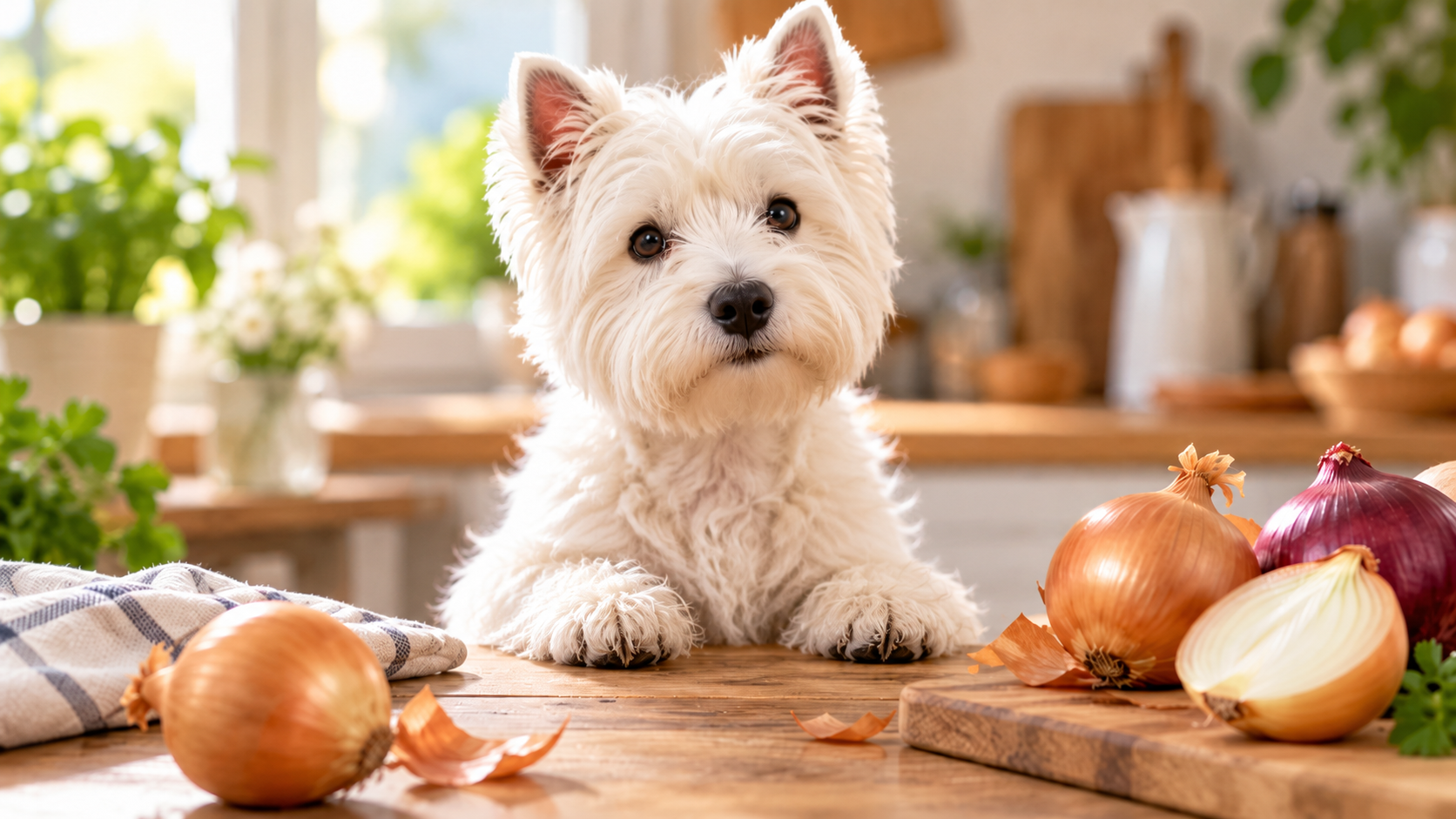
No, dogs should not eat onions. Raw, cooked, dried, and powdered onions are all toxic to dogs. They can damage red blood cells and potentially cause hemolytic anemia, a condition that affects the blood’s ability to carry oxygen.
Why Are Onions Toxic to Dogs?
Onions belong to the *Allium* family, which also includes garlic, chives, leeks, and scallions.
These plants contain sulfur-containing compounds that can cause oxidative damage to a dog’s red blood cells. Damaged cells may develop structures called Heinz bodies and break down prematurely, resulting in hemolytic anemia.
Cooking onions does not eliminate this risk.
According to the Merck Veterinary Manual, clinical signs have been reported after dogs consumed approximately 15–30 grams of raw onion per kilogram of body weight.
This is not a safe-dose guideline. Onion powder, repeated exposure, breed susceptibility, and differences between individual dogs can all influence the severity of poisoning. Never use a general dosage figure to decide whether your dog needs veterinary attention.
Are Cooked Onion and Onion Powder Dangerous?
Yes. Onions remain toxic whether boiled, fried, baked, grilled, or dehydrated.
Onion powder and dried onion are particularly concerning because they are concentrated and may be hidden in everyday foods.
Common sources include:
- Soups, broths, gravy, and stocks
- Seasoning mixes and spice blends
- Meatballs, burgers, and sausages
- Pizza and pasta sauces
- Certain baby foods and meat purées
- Flavored chips, crackers, and snacks
Even foods that do not visibly contain onion may include onion powder or onion-based seasoning.
If your dog eats a prepared food containing onion, contact a veterinarian or poison-control service with the ingredients and estimated amount eaten. Do not assume the exposure is harmless because the onion was cooked or mixed with other ingredients.
How Soon Do Symptoms Appear?
Some dogs develop digestive symptoms relatively soon after eating onion. However, signs of red blood cell damage may not appear until several days later.
Watch for:
- Vomiting or diarrhea
- Loss of appetite
- Unusual tiredness or weakness
- Pale or yellowish gums
- Rapid breathing or increased heart rate
- Reduced exercise tolerance
- Dark, reddish, or brown urine
- Collapse in severe cases
The ASPCA Animal Poison Control identifies vomiting, red blood cell breakdown, weakness, increased heart rate, and blood in the urine as potential signs of onion toxicity.
Do not wait for symptoms before asking for help. A dog may initially appear healthy even when red blood cell damage is developing.
What Should You Do If Your Dog Ate Onion?
If your dog has eaten onion, follow these steps:
- Remove the food. Prevent your dog from eating any more onion or onion-containing products.
- Check the ingredients. Save the packaging, label, or recipe if available.
- Record the details. Note your dog’s weight, the type and estimated amount of onion, and when it was eaten.
- Contact a veterinary professional. Call your veterinarian, an emergency veterinary clinic, or an animal poison-control service promptly.
- Follow professional guidance. Do not attempt to induce vomiting or give hydrogen peroxide, salt, activated charcoal, or other home remedies without veterinary instructions.
Veterinary treatment depends on the amount consumed, the timing of exposure, symptoms, and blood test results.
A veterinarian may recommend appropriate decontamination following recent ingestion, blood testing, monitoring, intravenous fluids, oxygen, or a blood transfusion in severe cases.
Not every dog will require extensive treatment, but professional assessment is important for determining the safest next steps.
A Real Case: “Safe” Spring Onions Were Not Safe for Dogs
A published veterinary case report documented hemolytic anemia in two dogs after they ate Catalan spring onions, known as *calçots*.
Blood examinations revealed changes consistent with oxidative red blood cell damage, including Heinz body formation.
The case illustrates why sweeter-tasting onion varieties and traditionally cooked onion dishes should not be considered safe for dogs.
You can read the published veterinary case report for additional details.
Are Garlic, Chives, Leeks, and Scallions Safe?
No. Garlic, chives, leeks, scallions, and shallots also belong to the *Allium* family and can be toxic to dogs.
Their toxic effects vary by plant and concentration. Garlic, for example, can be more toxic than onion by weight.
None should be intentionally offered as treats.
For safer snack choices, consider small amounts of plain carrot, cucumber, or cooked green beans without added seasoning.
You can also explore Dogsoria’s guides to tomatoes and avocado to understand which parts of these foods may pose risks and how to approach feeding them safely.
Remember that treats should make up only a small portion of a dog’s overall diet. Avoid added onion, garlic, salt, butter, and seasonings.
The Bottom Line
Onions are not safe for dogs in any form. Raw onion, cooked onion, and concentrated onion powder can all cause potentially serious health problems.
If your dog has eaten onion, collect the relevant details and contact a veterinarian or animal poison-control service promptly.
Early professional guidance is safer than waiting for symptoms or trying to estimate the risk using an online dosage chart.
FAQ
Frequently asked questions
My Dog Ate a Small Piece of Onion. What Should I Do?
Contact your veterinarian or an animal poison-control service, even if your dog seems fine.
A tiny piece does not automatically mean severe poisoning. However, the risk depends on your dog’s weight, the amount eaten, the form of onion, and any repeated exposure.
Note when the onion was eaten and approximately how much was consumed. Do not induce vomiting or try home remedies unless a veterinary professional instructs you to.
Can Dogs Eat Food After the Onions Are Removed?
It is best not to. Cooked dishes may still contain onion juices, small pieces, or powdered seasonings even after visible onions have been removed.
Can Dogs Recover From Onion Poisoning?
Yes, many dogs recover with timely veterinary assessment and appropriate treatment. Recovery depends on the severity of red blood cell damage, the amount ingested, and the dog’s overall health.
Should I Monitor My Dog at Home?
Only if a veterinarian or animal poison-control professional recommends home monitoring after evaluating the exposure.
Because symptoms of anemia can be delayed, a dog appearing normal immediately after ingestion does not guarantee that poisoning will not develop.
MORE FROM THIS CATEGORY